

Blogs
This month’s release extends Josys across three fronts: AI-powered integration building for complex authentication setups, broader application and agent discovery through Gemini and Netskope, and more granular governance controls for large enterprise environments. Here’s what’s new for IT Admins and MSPs.
New Feature Releases
Josys MCP (Model Context Protocol)
.jpg)
Building custom automations on IT management data typically requires direct API work and significant development time. Josys MCP lets you create AI agents on platforms like ChatGPT, Claude, and Cursor that connect directly to Josys data across identities, devices, apps, and departments. With Josys MCP, you can now build custom workflows - syncing device registers, pulling reports, taking actions - all through natural language instructions.
Custom Report Builder
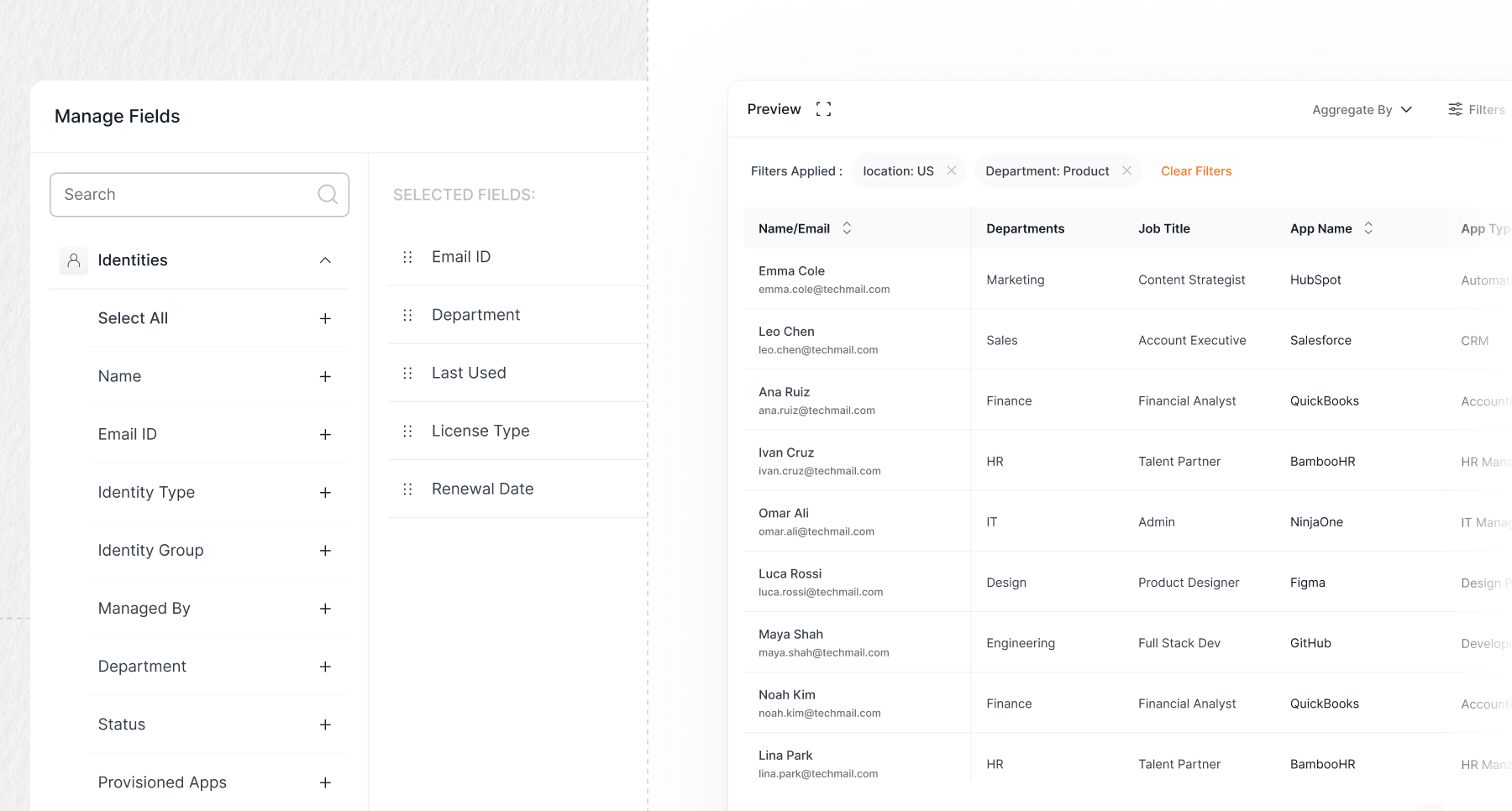
Cross-domain IT questions like “which terminated users still have active licenses?” currently require exporting CSVs and joining data in spreadsheets. Report Builder lets you select fields across Josys modules, apply filters, aggregate results, and save templates - all within a single drag-and-drop interface. You go from raw data to actionable reports in minutes instead of hours.
Upgraded AI Integration Builder to connect apps protected by SSO, MFA, or social login
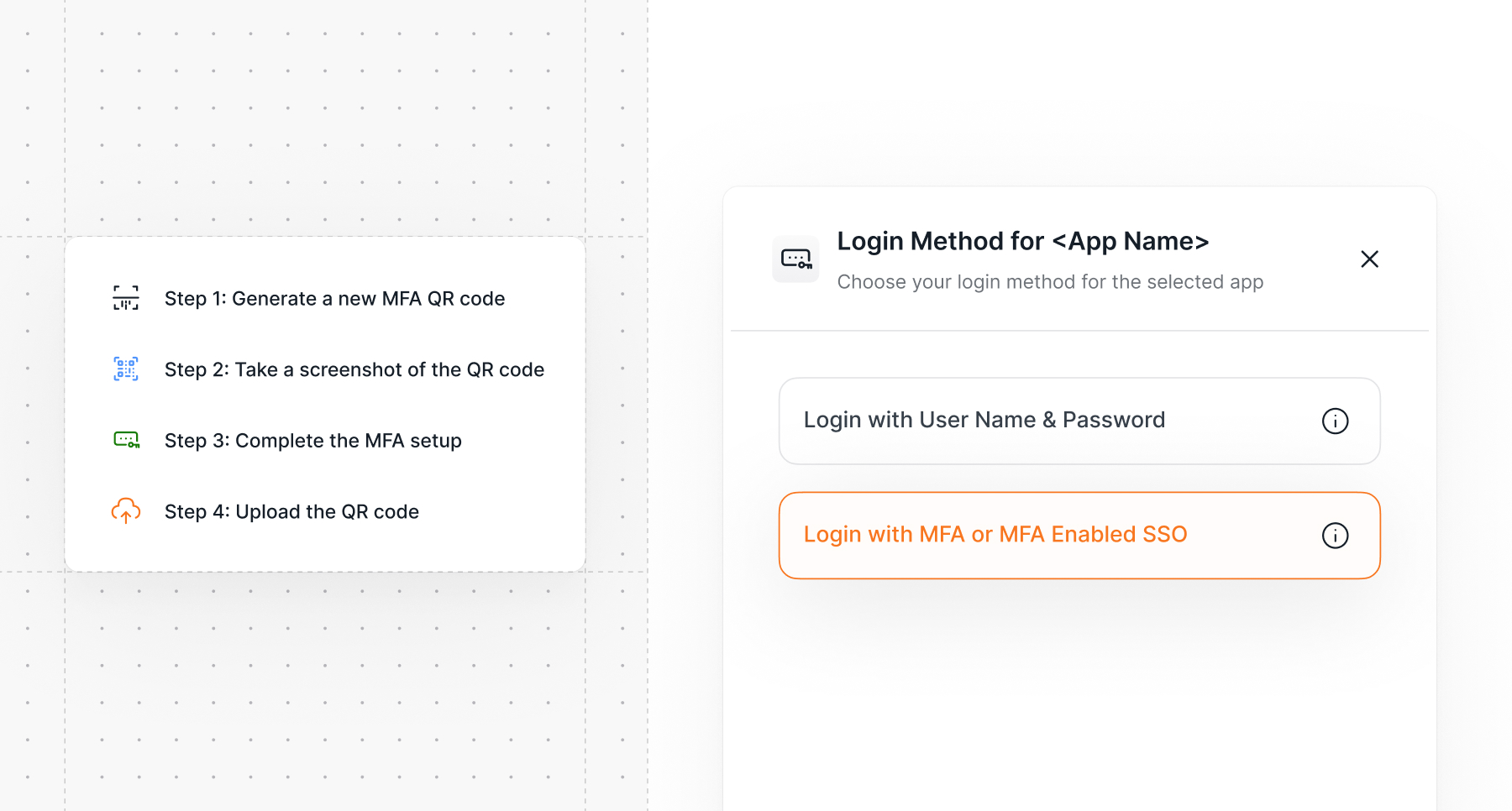
The AI Integration Builder previously only worked with apps using native username/password authentication, leaving SSO and MFA-protected apps out of reach. With this release, you can now build integrations for apps using SSO, social login, or MFA by configuring TOTP-based MFA directly in the setup flow, with verified support for Google Workspace, Microsoft, Okta, and HENNGE One. This eliminates the need to fall back to manual provisioning for your most security-conscious applications.
Google Gemini as an Agent Discovery Source
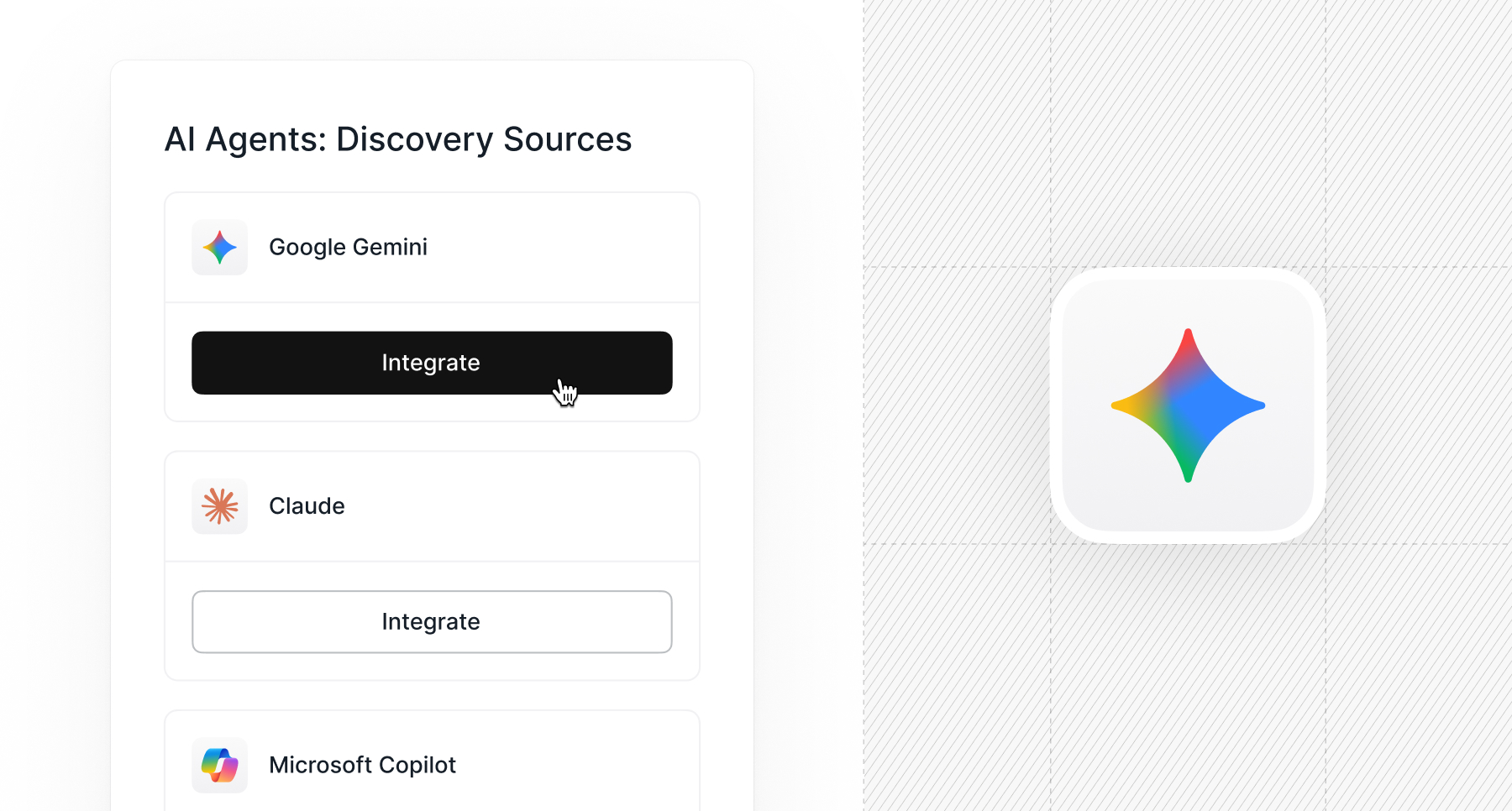
You can now connect Gemini Enterprise through your existing Google Workspace integration to discover agents and their connected applications alongside Claude and Microsoft Copilot in Josys. Your security team gets a centralized inventory to identify ownership gaps before agents become operationally risky.
Netskope as an App Discovery Source
Josys now integrates with Netskope to discover business SaaS apps from its 82,000-app dictionary, surfacing app names, last-used dates, and associated user accounts. You close shadow IT gaps that other discovery sources miss without adding another tool to manage.
Feature Enhancements
Smarter Approval Routing and Fallback Actions in Policy Workflows
.jpg)
Policy workflows can now route requests to app-specific admin approvers, ensuring each application is reviewed by the right person. Admins can also define fallback actions when a primary action fails or times out, keeping workflows moving automatically with less manual intervention.
Google Drive & SharePoint File Governance
Josys now supports SharePoint and Google Drive as file governance sources. Discover, classify, and govern documents across Microsoft 365 and Google Workspace - and enforce consistent policies from one platform.
Enterprise-Scale Identity Filtering
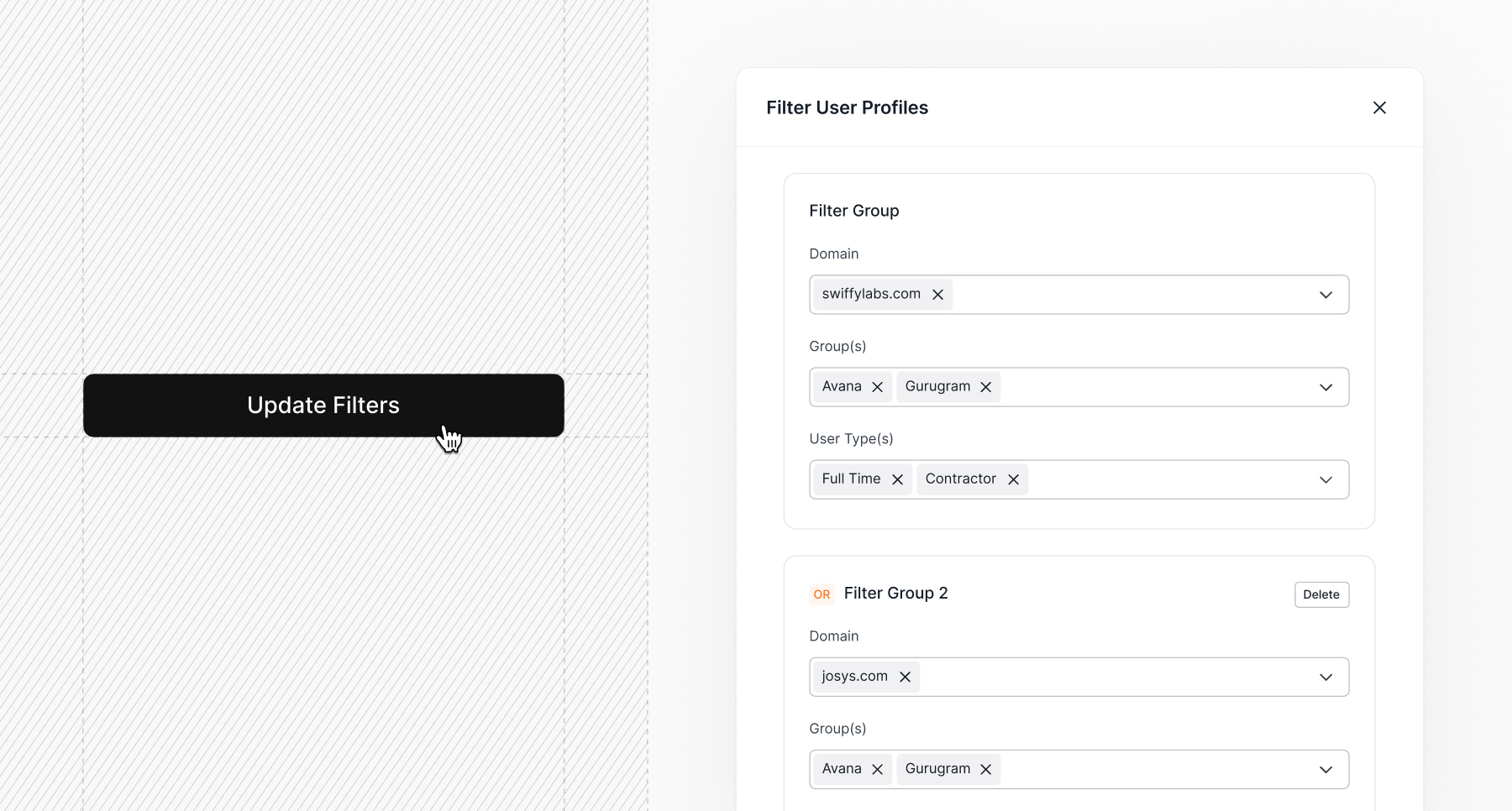
Large enterprises with complex identity structures often can’t model their org within a single filter rule, forcing manual workarounds during onboarding. Admins can now define up to five filter profiles using OR logic and explicitly filter Entra ID accounts by Member, Guest, or legacy null user-type. You sync exactly the right employees without accidental inclusions while existing sync behavior stays unchanged.
Bulk Status Updates for Discovered Apps
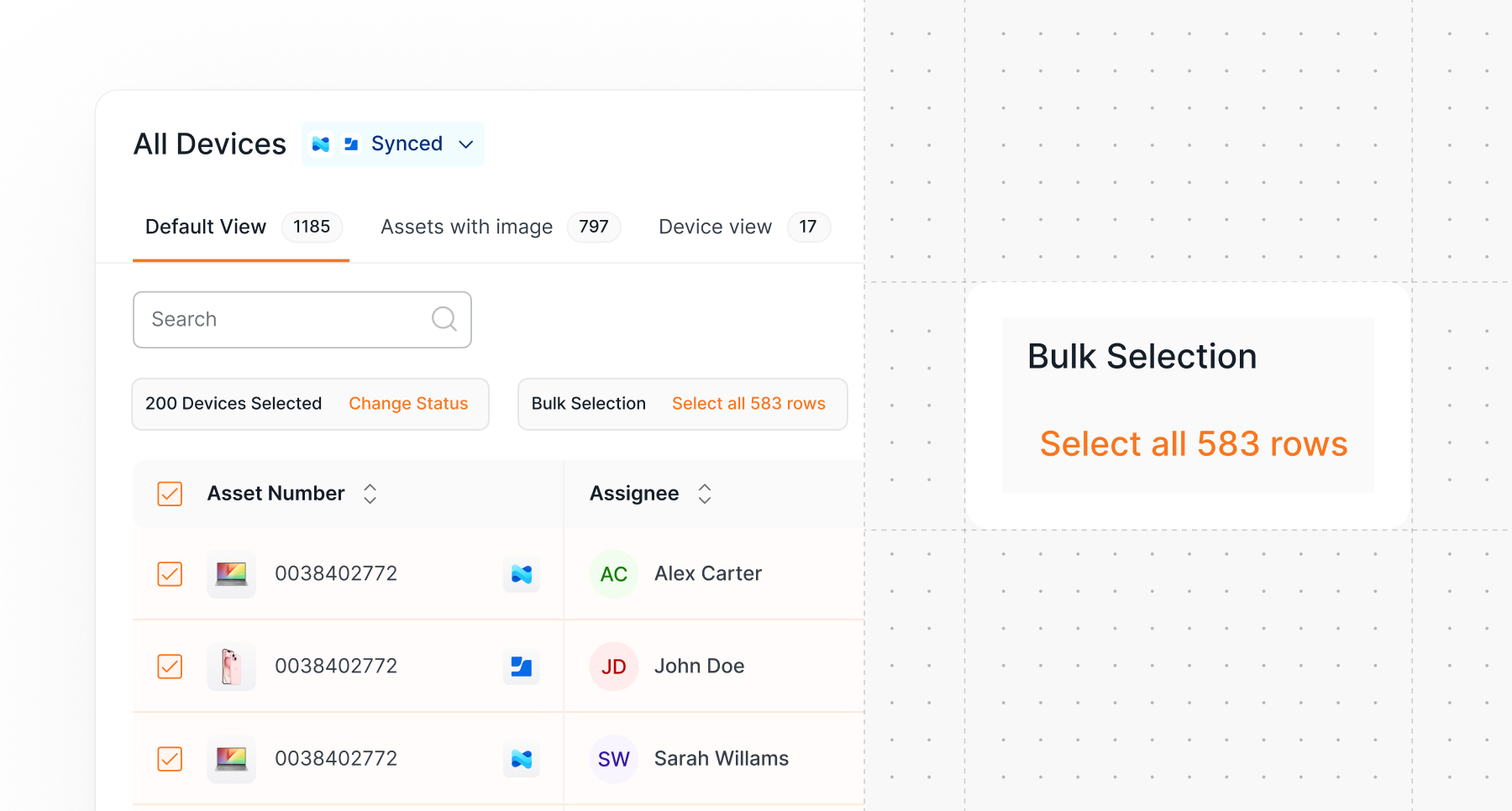
Classifying discovered apps one at a time is slow when you’re reviewing hundreds of shadow IT entries. You can now select up to 999 discovered apps across multiple pages and update their status - Approved, Unapproved, Under Review, Ignored, or Unclassified - in a single bulk action. Batches over 25 apps process in the background with progress tracked under Scheduled Tasks.
Interested in trying out any of the above features? Submit your request here and try Josys in action. It’s free for 14-days!
Josys, the AI-Powered Identity Governance Platform, continues to gain recognition in the G2 Spring 2026 Grid Reports, earning the #1 position in G2’s Momentum Grid® for SaaS Management Platforms (SMP) for the third consecutive time.
Josys was also named a Leader, being recognised and ranked across 75 categories and awarded 25 badges. More than industry accolades, these G2 Spring 2026 achievements underscore Josys’ proven impact on identity governance for IT teams and MSPs.
Recognition from Customers
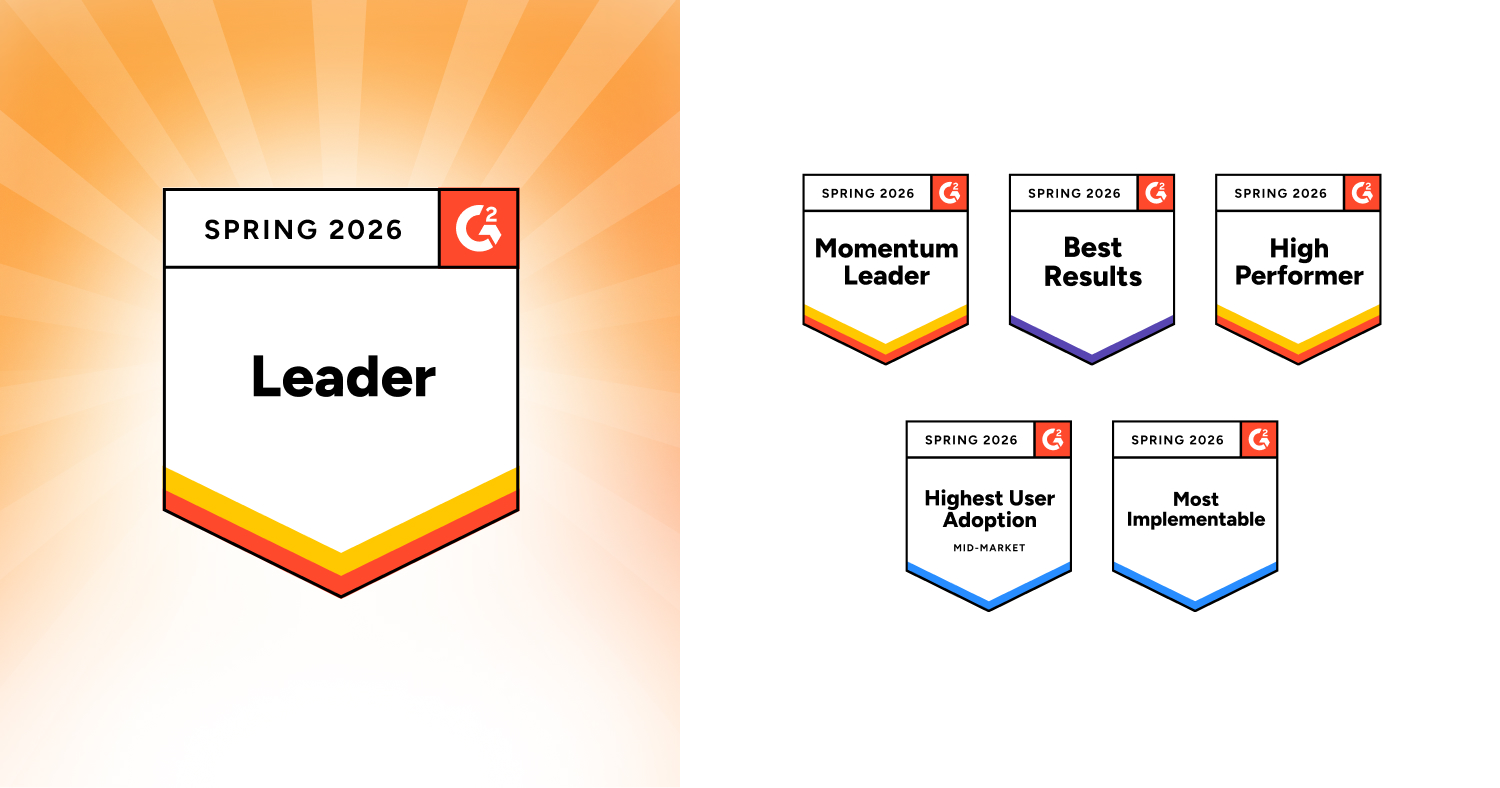
Josys has maintained an overall G2 Review rating of 4.4/5 based on 104 reviews as of March 17th, 2026. The rankings reflect a consistent pattern in how customers describe Josys: better visibility into who has access to what, and less manual burden on IT teams and MSPs.
“We were able to manage our information systems operations centrally, which significantly improved our overall operational efficiency. The support from our account representative was consistently attentive, responsive, and reliable, making it easy to address questions and move forward with confidence.” – Verified User in Financial Services
“I am most pleased with the ability to centrally visualize the management status of SaaS accounts and IT assets associated with joining, leaving, or transferring within the company. It allows us to instantly understand who is using which SaaS with what permissions, enabling us to standardize and streamline IT management, which tends to become personalized. The ability to simultaneously strengthen governance and reduce operational burden is a significant advantage.” – Verified User in Real Estate
These aren't isolated wins. Across 600 clients, IT professionals describe the same outcome: less complexity, more control.
What’s Next at Josys?
Looking ahead, Josys will continue advancing its vision of Autonomous Identity Governance by delivering new capabilities that further simplify IT operations and strengthen security posture. The company remains focused on rapid, customer-driven innovation, with frequent feature releases and platform enhancements. From deeper AI automation to expanded integrations and enhanced governance controls, Josys is committed to bringing even greater efficiency, visibility, and value to IT teams and MSPs worldwide.
The momentum is real. And it's only getting started. Book a demo to learn more.
About Josys:
Josys is the Automated Identity Governance and Administration (IGA) Platform designed to simplify how IT works. Trusted by IT teams and Managed Service Providers (MSPs), Josys delivers complete visibility and control over every user, application, and access permission within their identity perimeter. By automating critical workflows, including access review audits, lifecycle management, shadow IT detection, and license optimization, Josys transforms complex access policies and governance into seamless, autonomous processes that drastically reduce security risks, optimize spend, and unlock true operational efficiency. For more information, visit josys.com
These new features give IT teams better visibility and control across apps, devices, and workflows. With new reporting capabilities and smarter automation, managing your SaaS environment just got a lot more efficient.
New Feature Releases
Audit-Ready Reports for SaaS, Licenses & Devices
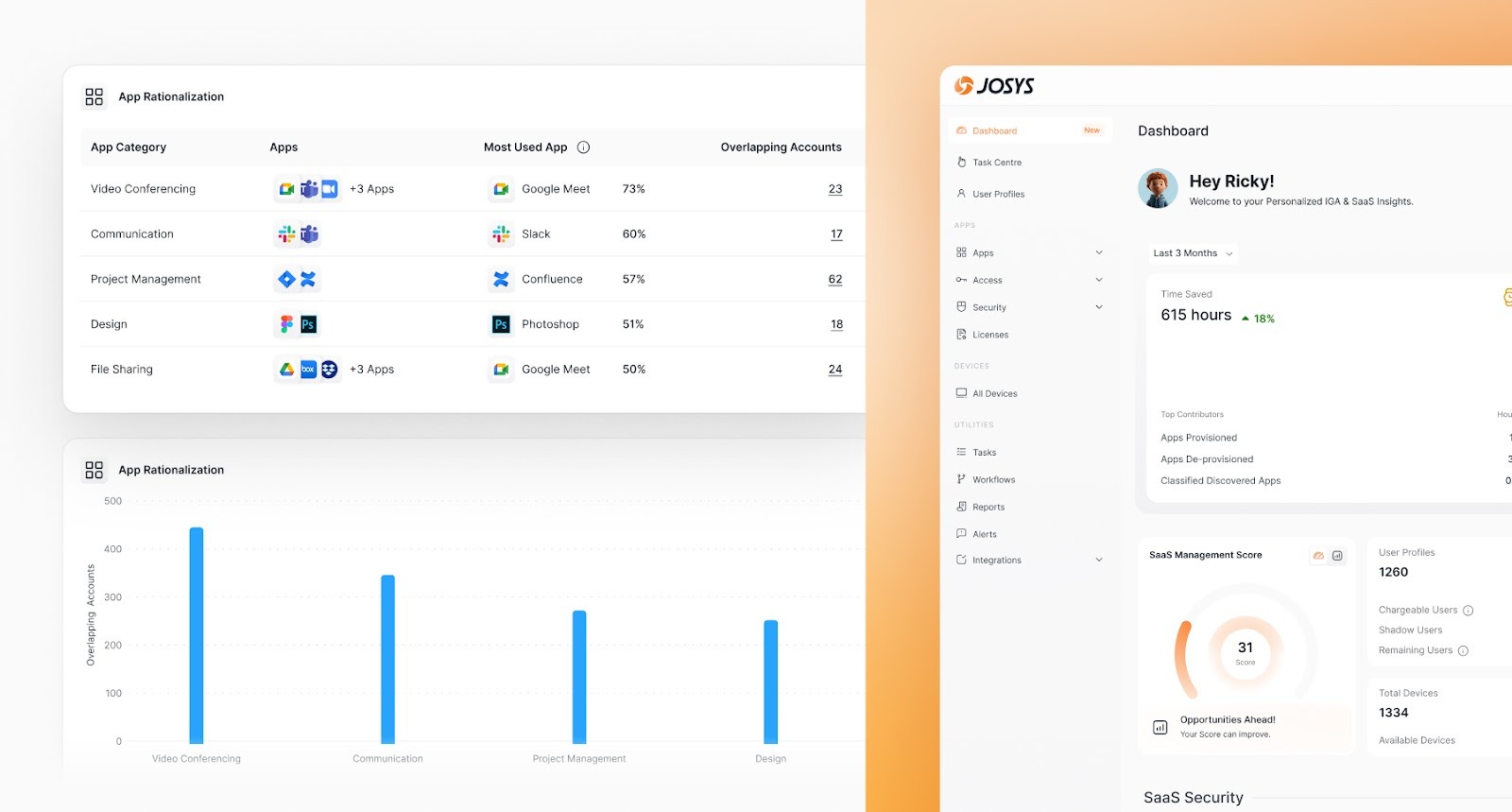
The new Reporting Module in Josys unifies app usage, license data, security insights, and device inventory into a single, visual dashboard across SaaS Security, License Optimization, and Device Management. Users can switch views, export reports (CSV, XLS, PDF), and control access with RBAC.
Key reports include:
- App Discovery - View your SaaS landscape by risk and category
- Shadow Users - Identify unmanaged users and take action quickly
- App Rationalization - Detect redundant tools and optimize your stack
Together, these insights help teams make faster, more informed decisions and strengthen SaaS governance.
Unified Device View Across All Your MDM Platforms
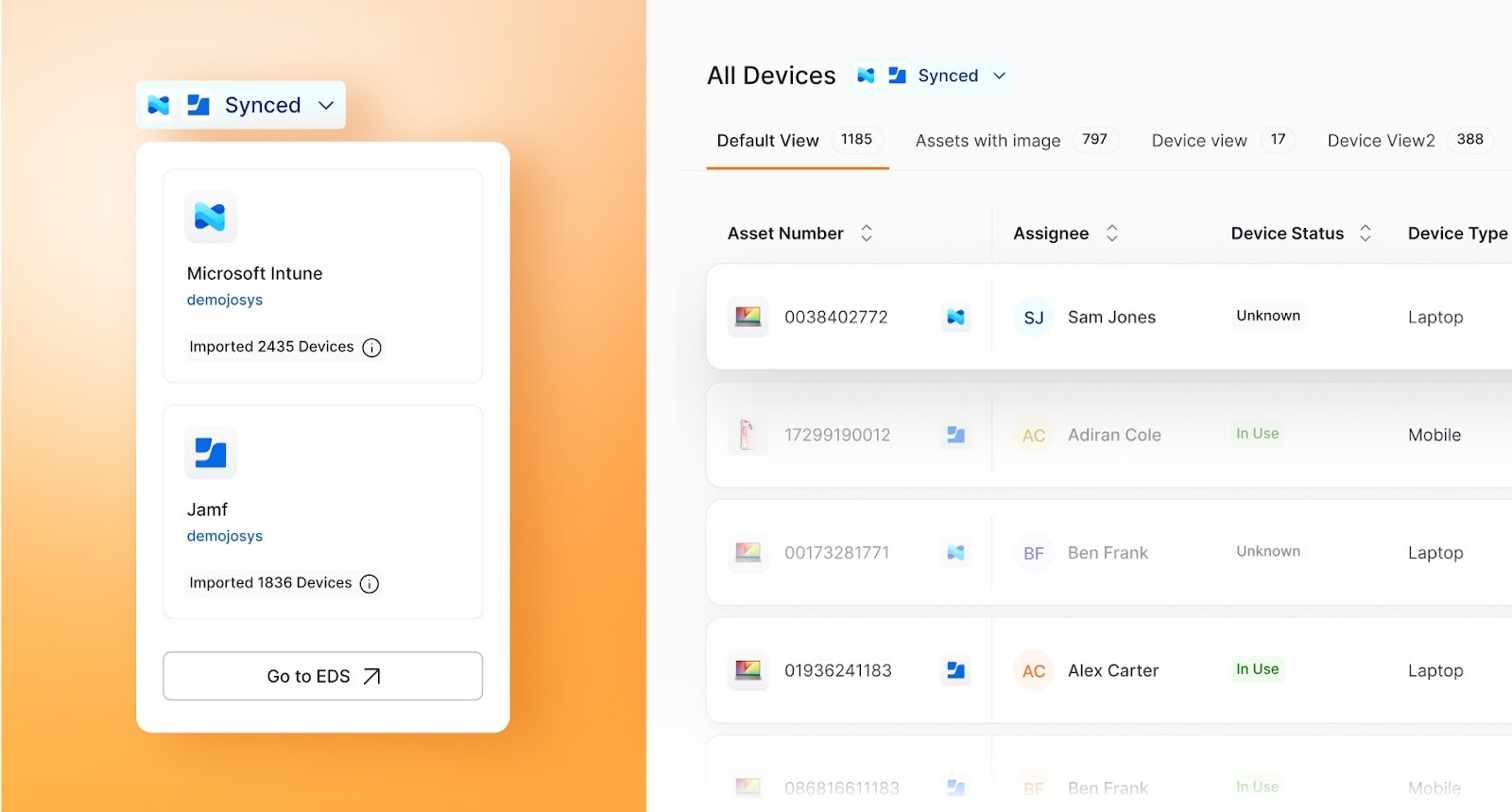
Organizations using both Microsoft Intune for Windows devices and Jamf for Apple devices often face fragmented asset visibility across multiple systems.
Josys now integrates with any 2 MDMs (Intune, Jamf, NinjaOne etc.) at once to automatically ingest device data and bring Windows and Apple assets into a single, unified dashboard. IT admins can view inventory, track device ownership, and monitor compliance across both ecosystems without switching tools.
One Prioritized Hub for Every Critical IT Action
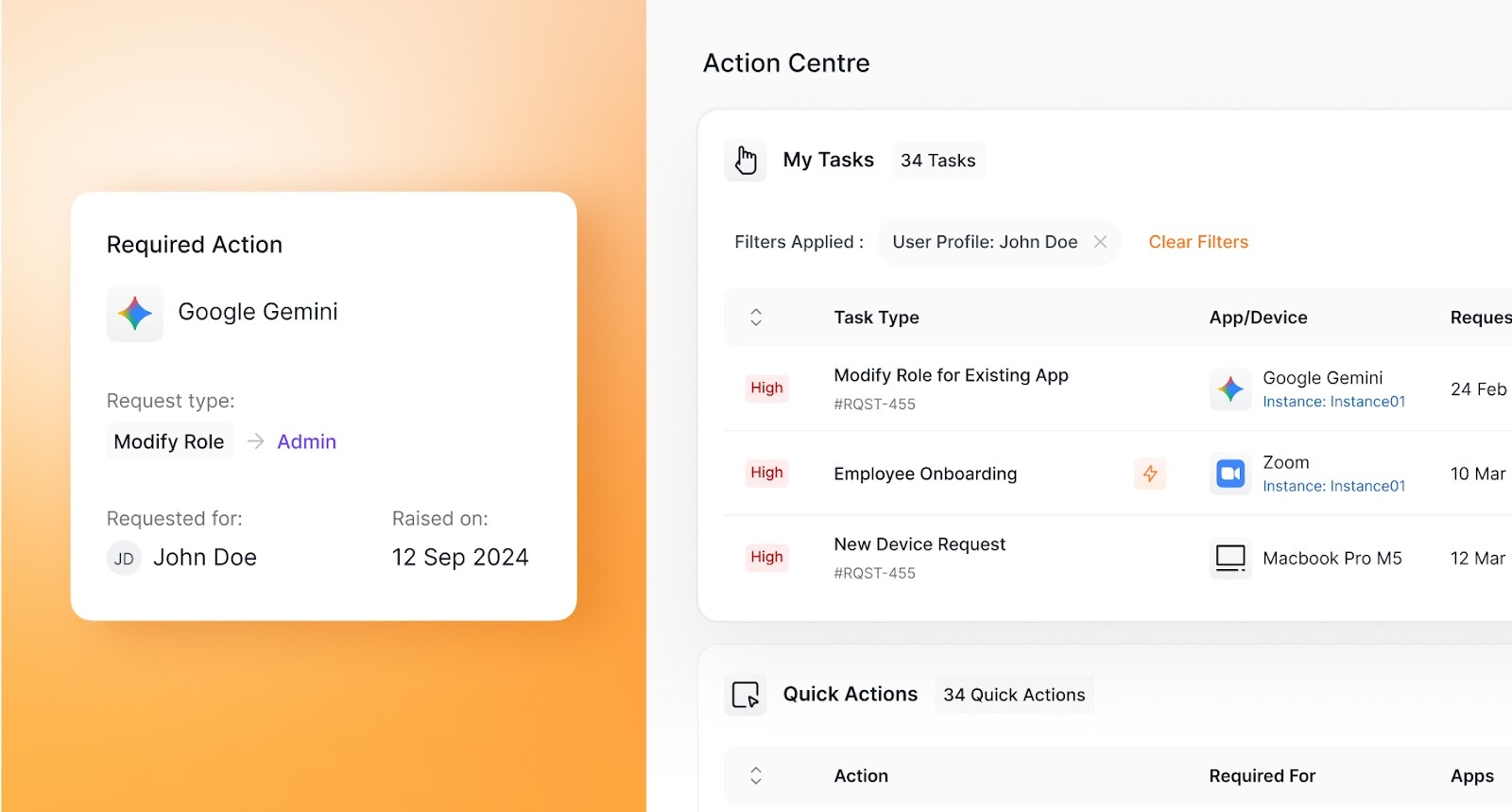
Introducing the Action Centre, a centralized hub where IT admins can view, prioritize, and act on tasks across their SaaS environment.
It surfaces key opportunities such as resolving shadow accounts, removing underutilized licenses, and classifying discovered apps. Each action shows the required step, associated app context, severity level, and a direct CTA (e.g., Automate, Deprovision, Classify).
Accessible via a dedicated ‘Action Center’ tab, admins can track task progress, ignore items when needed, and focus only on relevant actions.
Automated Governance for Discovered Apps
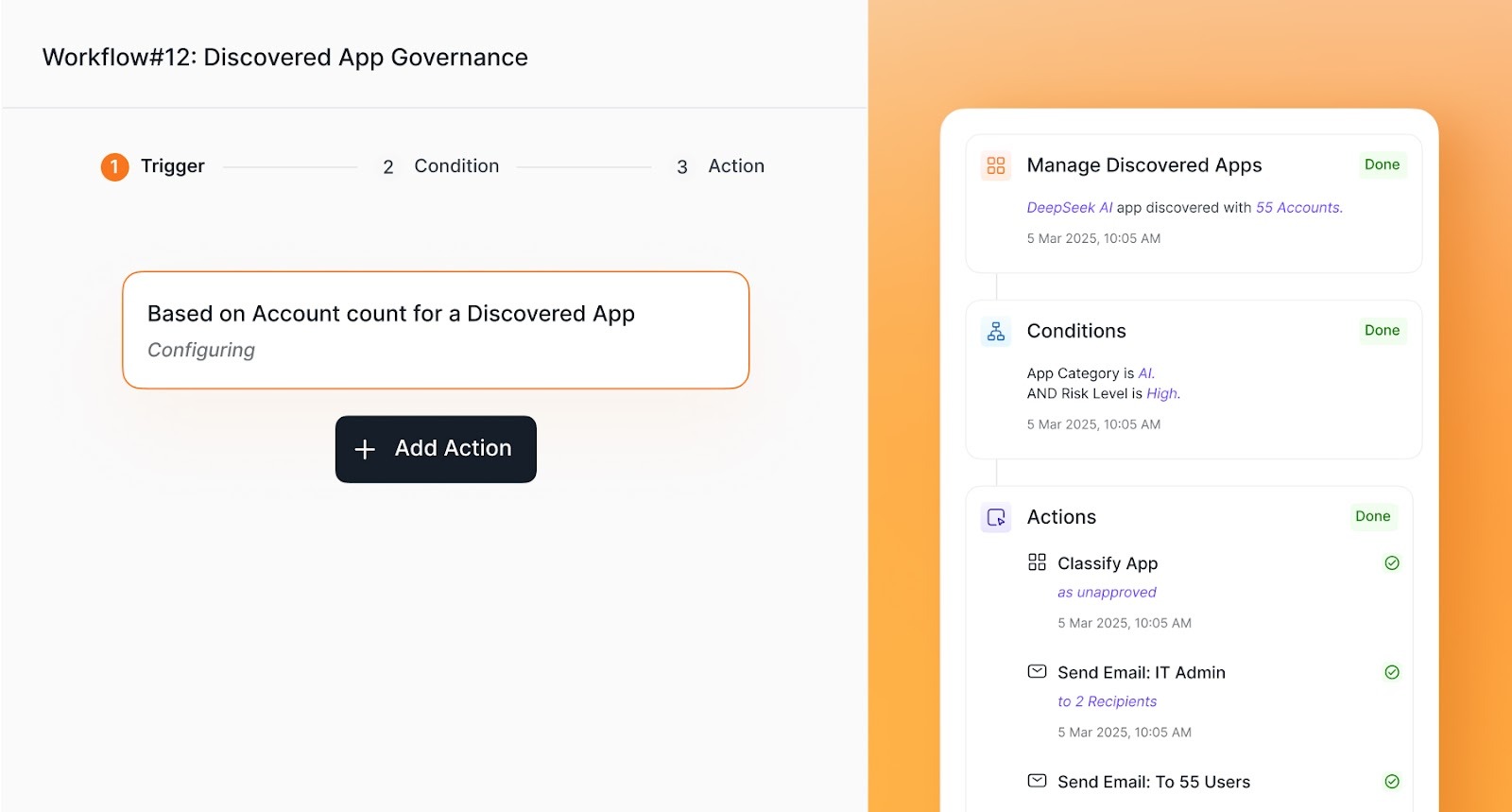
Josys workflows now extend to discovered apps - automatically classifying them based on usage, risk, or compliance, and triggering actions like sending email, creating JIRA tickets, or customizing HTTP requests in real time.
This means faster response to unauthorized usage, consistent policy enforcement, and far less manual overhead for IT teams.
Note: Discovered Apps are applications automatically identified across your environment by Josys’s AI-powered discovery engine, but have not yet been integrated for governance and management.
Feature Enhancements
Run Workflows Exactly When You Need It
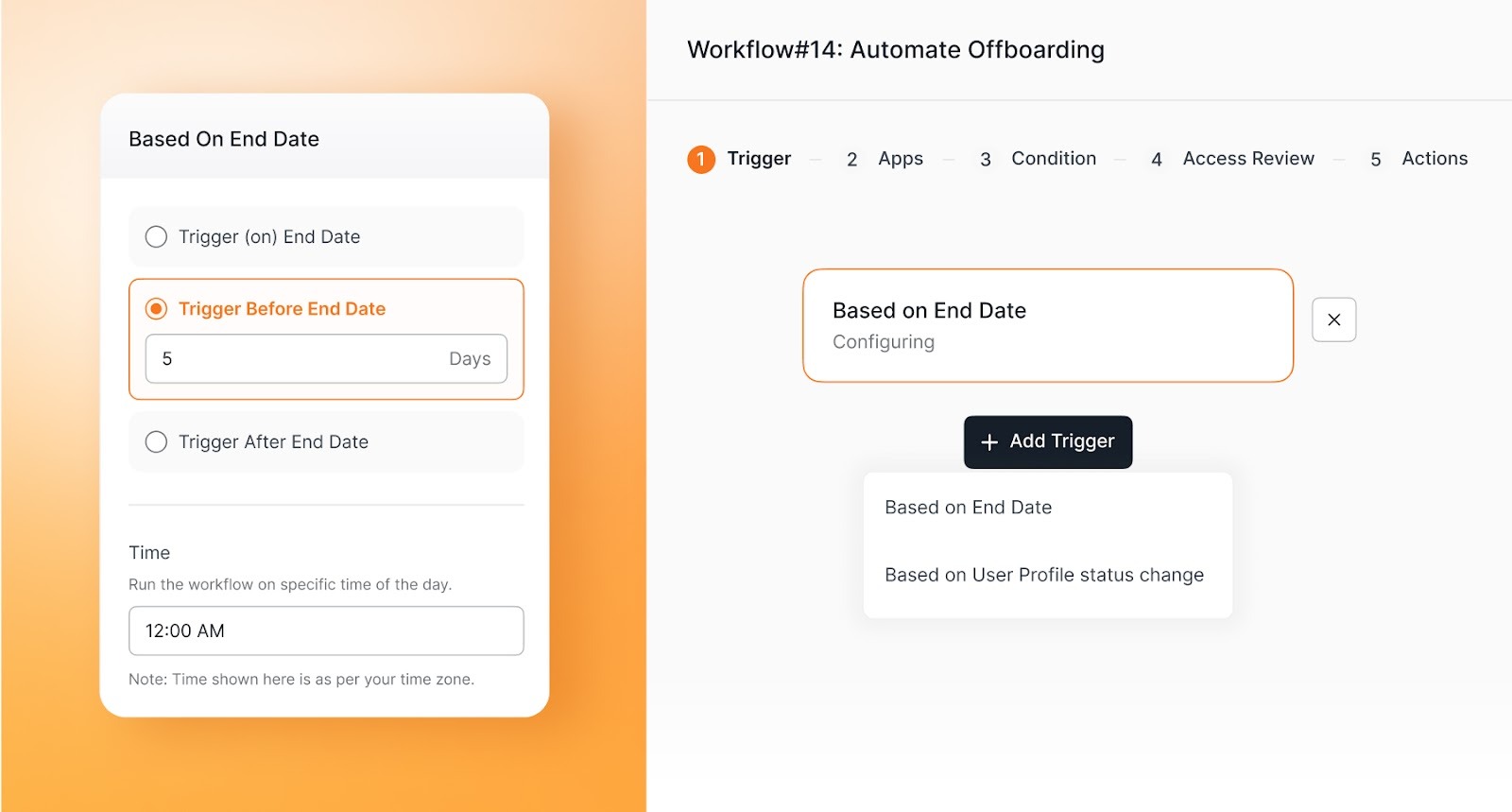
Admins can now run onboarding and offboarding workflows before, on, or after key dates, choose the exact time of execution, and automate license optimization based on last usage.
The result is more precise, reliable automation that ensures workflows run exactly when needed, without manual intervention or missed actions.
Webhooks to Trigger Automation Workflows Based on User Attributes
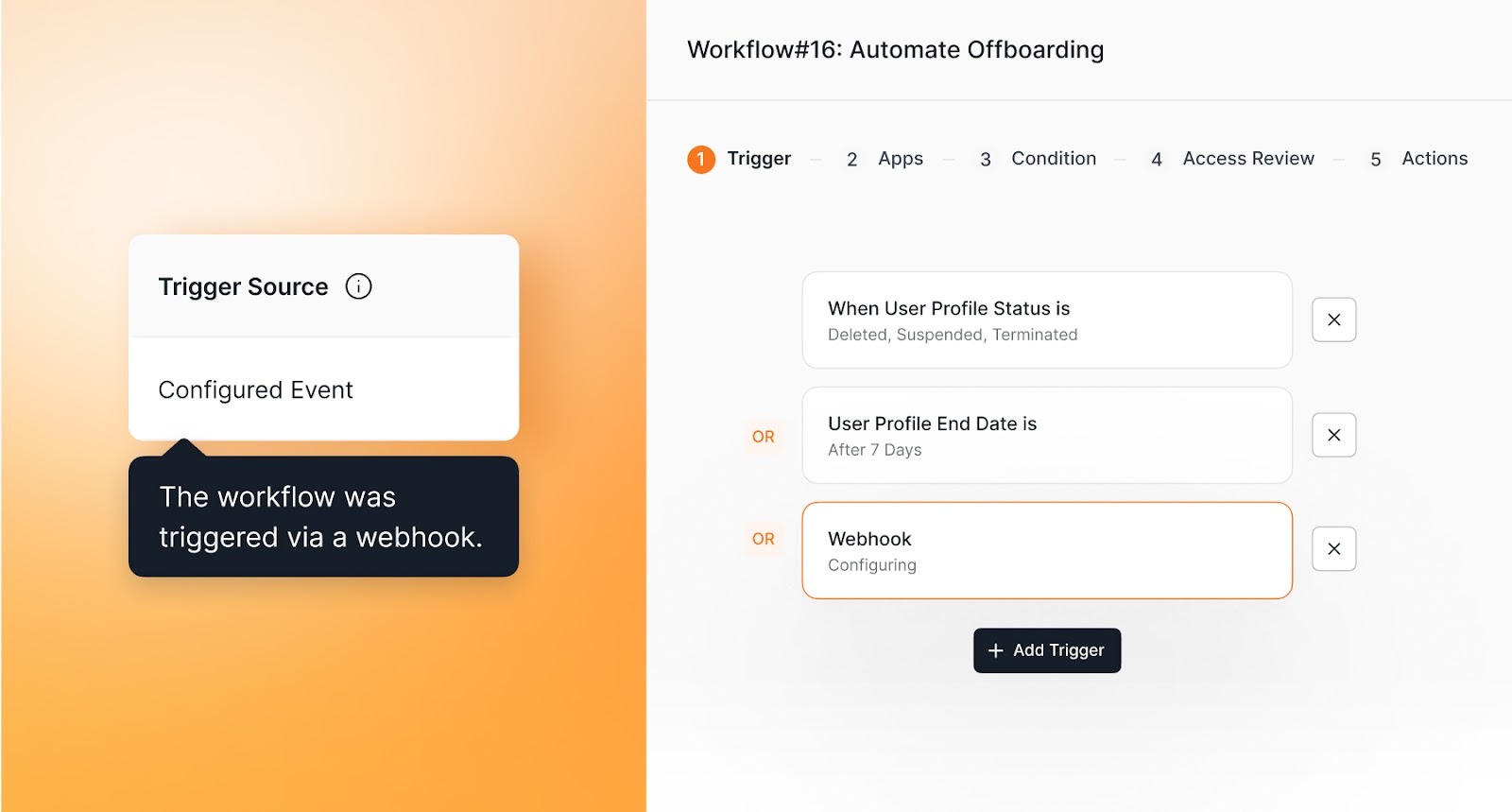
With Webhook-triggered workflows, Josys can now act the moment something happens in your ecosystem. Whether it’s kicking off onboarding after background verification, provisioning access when an ITSM ticket is approved, or instantly revoking access when a security threat is detected, everything happens in real time, without waiting on native triggers.
Our Commitment Moving Forward
This March release represents our continued commitment to provide a more integrated and automated IT management experience. By bridging the gap between identity governance, SaaS, and device management, Josys continues to empower IT teams to work smarter and more securely. Book a demo to learn how Josys can help simplify your IT processes.
See all articles.



Join hundreds of companies and start your SaaS management journey today

End-to-End Identity
Governance made easy for IT


