This site uses third-party website tracking technologies to provide and continually improve our services, and to display advertisements according to users' interests. I agree and may revoke or change my consent at any time with effect for the future.
Shadow IT now accounts for 30–40% of enterprise tech usage, and in 2026 its fastest-growing form is unsanctioned AI - employees adopting AI assistants, agents, and SaaS tools faster than IT can track them. This guide covers the current state of shadow IT, why it matters, how shadow IT discovery works, and how to move from discovery to ongoing shadow IT management. Josys offers a centralized platform to discover, evaluate, and manage shadow IT - ensuring visibility, compliance, and security in a rapidly evolving tech landscape.
Shadow IT in 2026: What You Need to Know
The definition of shadow IT has expanded well beyond the occasional rogue app. In 2026 it includes unapproved AI tools and agents, unmanaged cloud environments, and personal devices used for work. According to Gartner, as much as 40% of IT spending in large organizations happens without oversight from IT - which means most companies operate a fragmented, insecure tech environment without realizing it.
The single biggest accelerant is AI. Over the last two years employees have adopted AI assistants, copilots, and autonomous agents at a pace no procurement process can match - often wired into company data with permissions nobody reviewed. Remote work already made it easy for teams to spin up their own SaaS; AI has multiplied both the volume and the risk. These tools create blind spots that compromise security, inflate cost, and make compliance nearly impossible.
What Is Shadow IT?
Shadow IT refers to any technology used within an organization without approval or visibility from the IT department - unauthorized SaaS platforms, AI tools and agents, cloud instances, mobile apps, and connected devices. It can be as simple as a team using a free collaboration tool without telling IT, or as complex as customer workflows running on untracked infrastructure. Prevalence varies by industry: regulated sectors like healthcare and finance report lower usage (~25%), while tech and marketing can hit 60%. Most IT teams are unaware of at least a third of the tools in use across their company.
Shadow AI: The Fastest-Growing Form of Shadow IT
In 2026, "shadow IT" and "shadow AI" increasingly overlap. Unsanctioned AI tools and agents are now among the most common and riskiest unmanaged apps, because they often touch sensitive data and act autonomously. The discovery and management principles in this guide apply to them directly, but shadow AI has its own detection nuances and governance needs. For a dedicated deep dive, see our guide to discovering and governing shadow AI.
Why Employees Use Shadow IT
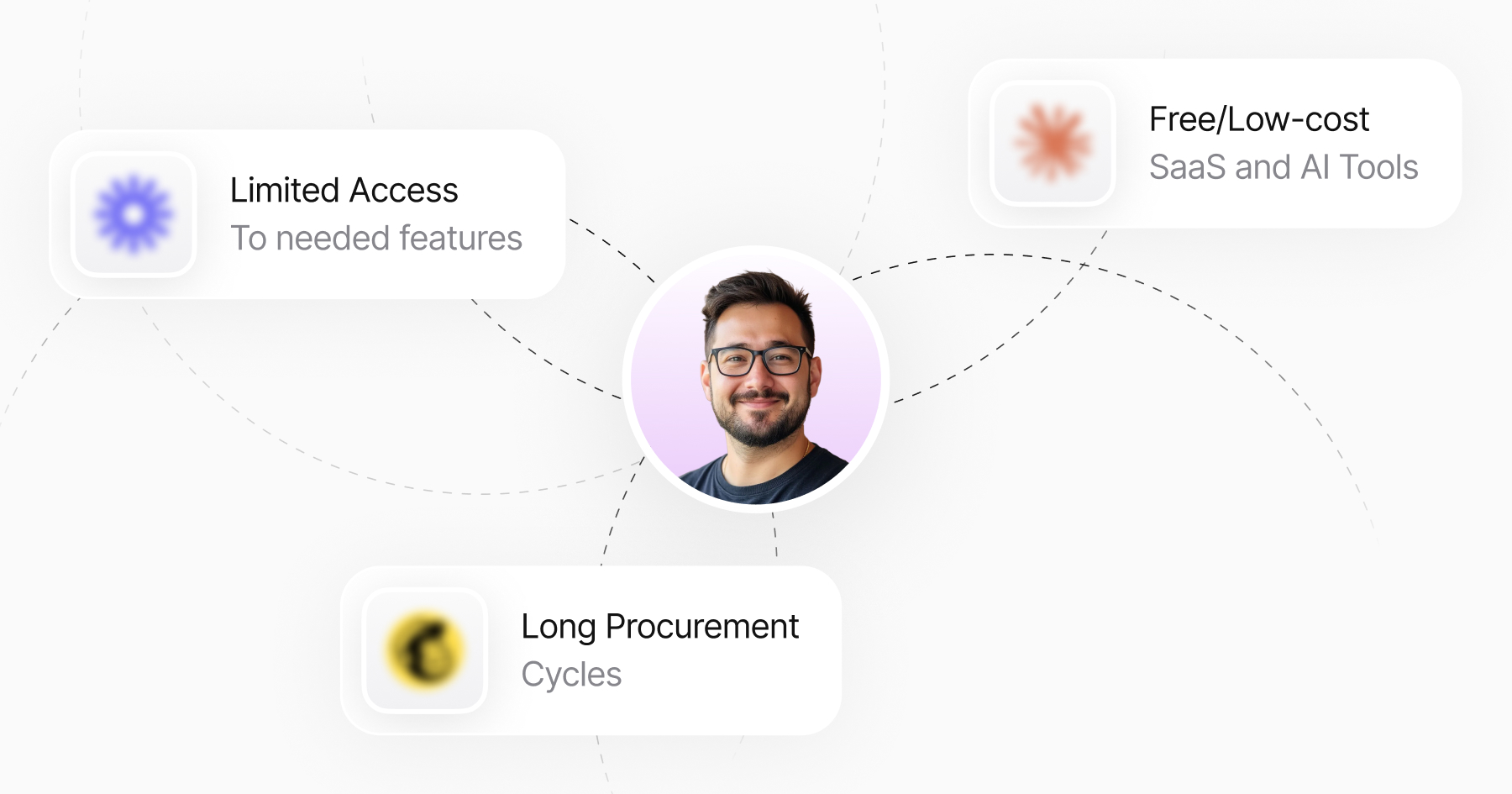
Employees turn to unapproved tools not to be malicious, but to move faster. Long procurement cycles, limited access to needed features, and a flood of free or low-cost SaaS and AI tools make it tempting to bypass IT. These tools help people meet deadlines - at the cost of organizational visibility and control. Shadow IT is often a symptom of deeper process problems: if teams had faster ways to request software or access emerging tech, many would never go around IT in the first place.
Why Shadow IT Is a Problem
The risks are serious. On security, unmonitored apps create openings for data leaks, unauthorized access, and breaches - over 20% of reported breaches now involve shadow IT, and many of these apps are outdated, unencrypted, or disconnected from company identity systems.
On compliance, regulations like GDPR and HIPAA require oversight you can't provide for systems you don't know exist; one healthcare organization faced over $1M in penalties after patient data surfaced in unapproved cloud services. The threat isn't hypothetical: cloud platform Vercel recently suffered a breach when an attacker compromised a third-party AI tool, reached internal systems, and exposed environment variables - a stark reminder of how unvetted apps widen the attack surface. The Vercel breach offers clear lessons on preventing this kind of exposure.
And on continuity, business-critical work running on a tool with no SLA can grind to a halt if that tool changes or disappears. These risks compound quietly - which is why the hidden costs of shadow IT are usually far larger than they first appear.
What to Look for in a Shadow IT Discovery Tool
The best shadow IT discovery tools don't scan once and disappear - they provide continuous, automated discovery and integrate deeply with your existing IT and security stack. Strong platforms combine multiple data sources - network traffic, browser signals, endpoint scans, identity systems, and cloud/SaaS logs - to uncover unapproved apps.
Each method has trade-offs in coverage and effort; see how SaaS discovery works across browser, network, and API approaches and where each falls short. But visibility alone isn't enough: leading tools categorize apps by department, user, data type, and risk level, and connect to your SIEM, DLP, IAM, and ticketing systems so findings trigger real workflows, not just reports.
Shadow IT Management: Turning Discovery Into Control
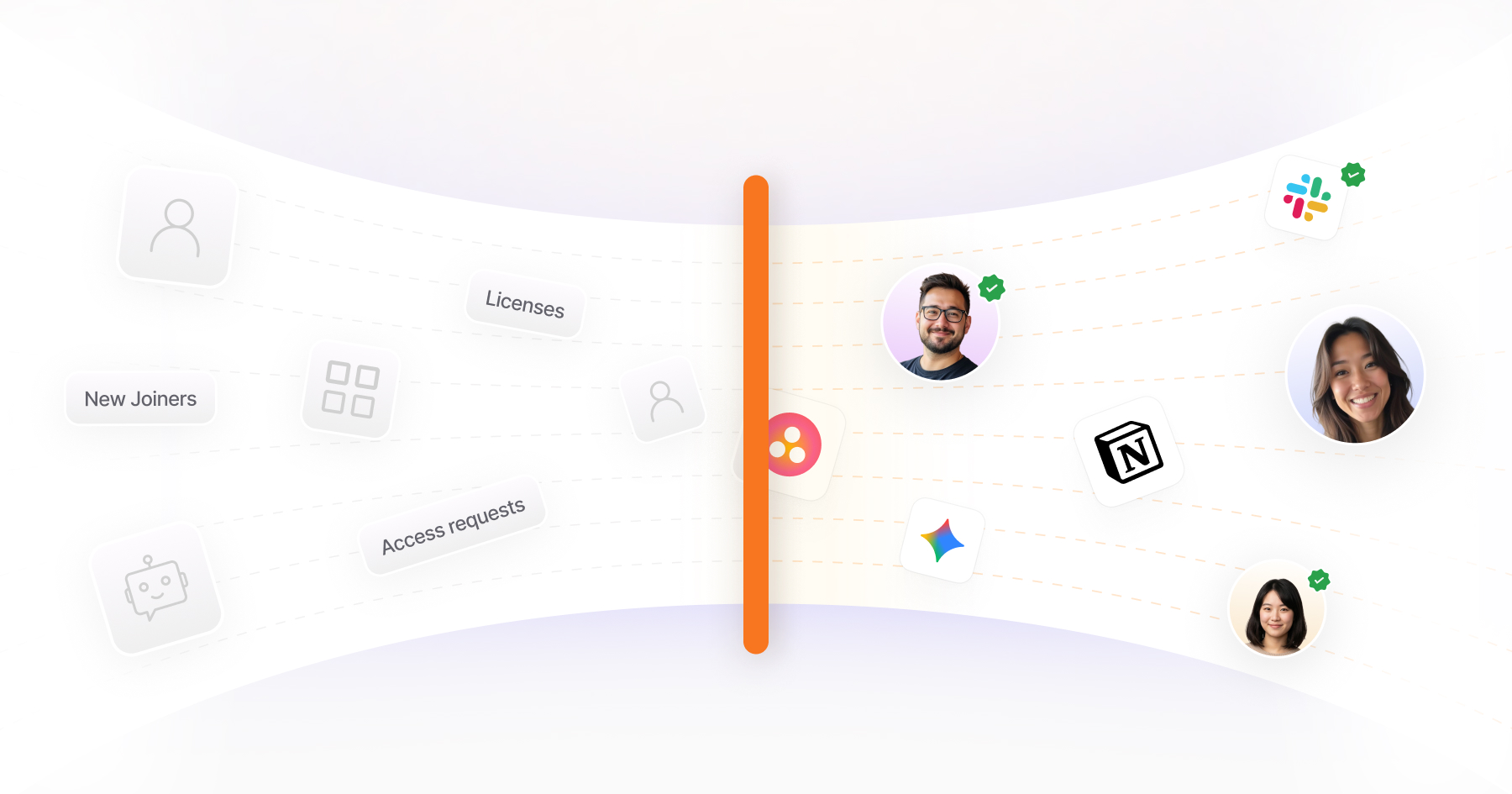
Discovery tells you what exists; shadow IT management is what you do next. Effective shadow IT management is a continuous loop rather than a one-time cleanup: discover unapproved apps, assess each one's risk and business value, decide whether to sanction, replace, or retire it, and enforce that decision through policy and automation - then monitor continuously as new tools (and new AI agents) appear. The goal isn't to eliminate every unsanctioned tool; it's to bring them into a governed process so security, compliance, and cost stay under control while teams keep moving fast.
Josys: Your Shadow IT Control Center
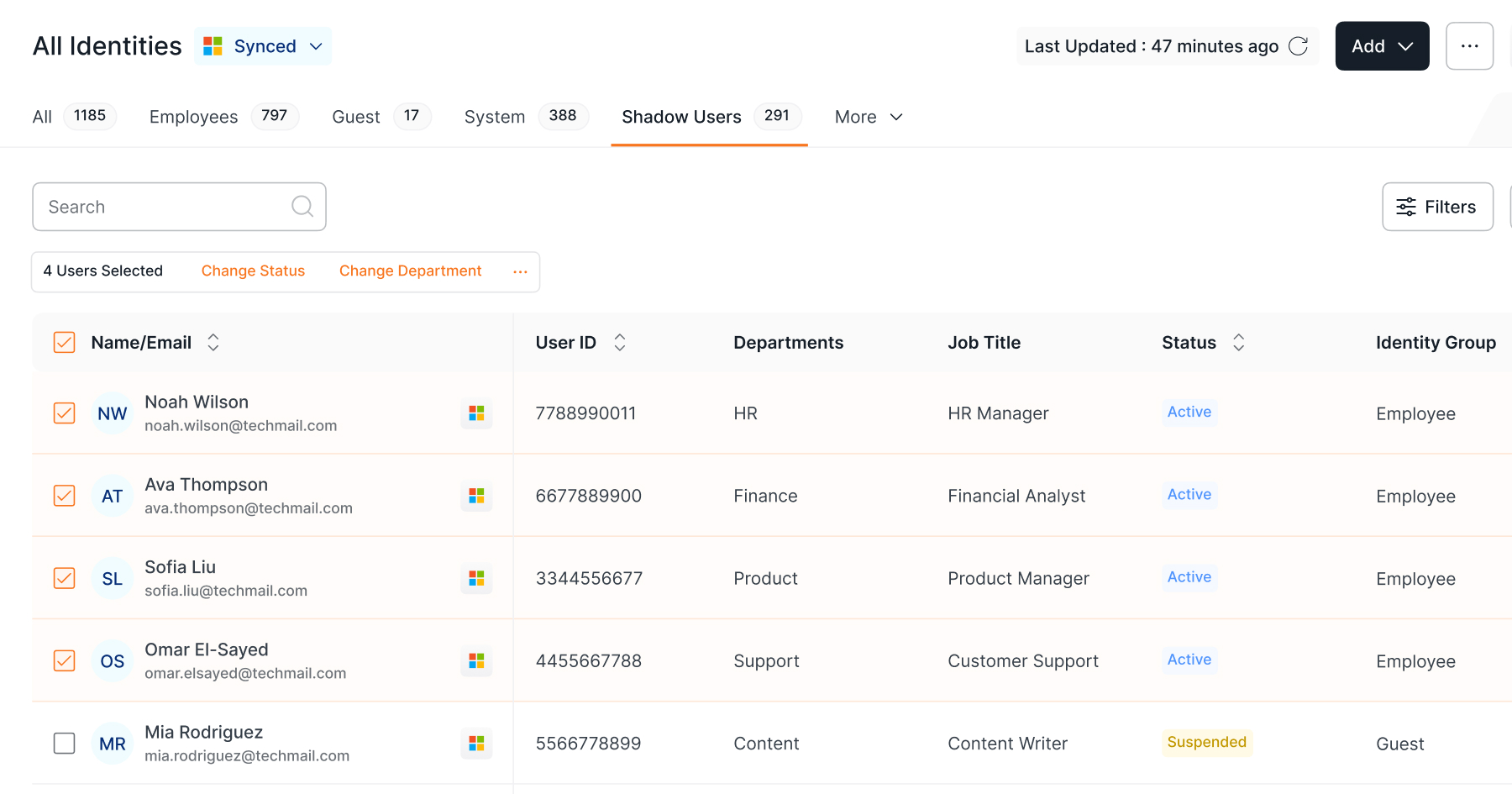
Josys helps IT teams go from reactive to proactive in managing shadow IT. Our shadow IT discovery and governance solution uncovers unapproved tools and AI apps across your organization, maps usage and data flows, and integrates with your broader IT ecosystem - making it easy to assess risk, approve or shut down tools, and track remediation over time. Organizations using Josys typically discover three times more unauthorized tools than expected, cut SaaS spend by up to 25% by consolidating duplicates, and reduce response times to security issues by over 60% through automation.
Instead of juggling multiple discovery tools and dashboards, Josys offers a unified view of your shadow IT landscape and the control to act on it. New to Josys or already using it? Our Help Center walks through how to discover and manage shadow IT step by step.
How to Implement Shadow IT Discovery the Right Way
Start by setting clear goals - reducing security risk, eliminating redundant software, or preparing for audits - then roll out discovery in phases, beginning with one department or region before scaling. Prioritize remediation by risk and business value; not all shadow IT is harmful, and some tools are worth approving. Keep it transparent: frame discovery as a collaboration to improve security and efficiency, not a crackdown, and build fast-track approval paths so teams can move from shadow IT to supported apps. Track progress, measure outcomes, and communicate wins.
Develop a Company-wide Policy
A formal shadow IT policy gives employees guidance and IT a framework for action. Define what counts as shadow IT, assign ownership across departments, and outline how new tools - including AI tools and agents - should be requested, reviewed, and approved. Offer safe ways for employees to explore new tech, especially generative AI. Make the policy part of onboarding, revisit it annually, and treat it as a living resource, not a static rulebook.
Frequently Asked Questions
What is shadow IT discovery?
Shadow IT discovery is the process of finding technology - SaaS apps, AI tools, cloud instances, devices - in use across an organization without IT's approval or knowledge, typically using automated tools that draw on network, browser, endpoint, and identity/SaaS data.
How is shadow IT management different from discovery?
Discovery is finding the unapproved tools; shadow IT management is the ongoing process of assessing, sanctioning/replacing/retiring, and governing them through policy and automation. Discovery is the first step; management is the continuous loop that follows.
What tools discover shadow IT?
Dedicated SaaS management and shadow-IT platforms (like Josys) combine several detection methods; some CASBs and network-monitoring tools also surface shadow IT. The strongest approach blends browser, network, and API-based discovery.
How does shadow AI relate to shadow IT?
Shadow AI is a subset of shadow IT - unsanctioned AI tools and agents. It's the fastest-growing category and carries elevated risk because these tools often access sensitive data and act autonomously.
Final Thoughts
Shadow IT isn't going away and in 2026, with AI accelerating adoption, the gap between what employees use and what IT can see is widening. But with the right approach it doesn't have to be a constant source of stress. IT leaders who shift from reactive monitoring to proactive shadow IT management — backed by strong discovery tools and clear policy — can turn shadow IT from a liability into a source of controlled innovation. Josys is purpose-built to help you make that shift.