This site uses third-party website tracking technologies to provide and continually improve our services, and to display advertisements according to users' interests. I agree and may revoke or change my consent at any time with effect for the future.
Zluri has established itself as a solid Identity and SaaS Management Platform, offering discovery, optimization, and compliance features that help IT teams gain visibility into their software stack. However, it's not the right fit for every organization. Some teams need deeper integration with HR and finance systems, others require more robust hardware asset management, and many are looking for platforms that go beyond SaaS-only visibility to provide comprehensive IT operations management.
This guide examines the top 10 Zluri alternatives, analyzing their unique strengths, ideal use cases, and how they compare across critical dimensions such as automation, pricing, scalability, and vendor support. Whether you're outgrowing Zluri's capabilities or evaluating your first SMP, you'll find actionable insights to make an informed decision.
What Zluri Offers as a SaaS Management Platform (SMP)
Before we dive into alternatives, let's establish what Zluri brings to the table. Zluri is a SaaS management platform that focuses on discovery, optimization, and governance of software subscriptions. It connects to your tech stack through integrations with SSO providers, financial systems, and direct API connections to popular SaaS applications.
The platform's core value proposition centers around visibility: identifying which applications your organization uses, who's using them, and how much you're spending. This baseline functionality has made Zluri a popular choice for mid-sized companies looking to wrangle SaaS sprawl.
What Zluri Offers as an Identity Governance and Administration Platform
Beyond SaaS management, Zluri positions itself as an Identity Governance and Administration (IGA) platform, focusing on access control, user provisioning, and compliance oversight across your application ecosystem.
Benefits of Zluri SaaS Management
Comprehensive SaaS discovery: Zluri excels at identifying both sanctioned and shadow IT applications across your organization
Automated user lifecycle management: Onboarding and offboarding workflows help ensure users get the right access at the right time
Spend optimization insights: The platform surfaces unused licenses and redundant applications to help reduce waste
Compliance and audit trails: Built-in reporting helps satisfy security and compliance requirements
Drawbacks of Zluri SaaS Management
Despite its strengths, Zluri has limitations that may not suit every IT environment:
Pricing complexity: Costs can escalate quickly as your employee count grows, making it less viable for scaling organizations
Regional availability: Some integrations and support options are limited outside North America and Europe
Lack of multi-tenant structure: If you manage multiple client environments, Zluri isn't designed to handle separate client endpoints effectively
Limited file sharing permission management: The platform lacks file management and visibility features, creating potential risks for sensitive data exposure
Integration gaps: Critical integrations your tech stack depends on may not be available, limiting the platform's effectiveness in your specific IT environment
If SaaS-Only Visibility Isn't Enough for Your IT Strategy, It's Time to Think Bigger
Here's what we've learned from working with IT teams and MSPs: SaaS management is just one piece of the puzzle. Modern IT teams need unified visibility across software subscriptions, hardware assets, device lifecycles, and procurement workflows. When your SaaS management platform operates in a silo, you end up juggling multiple tools. One for software, another for devices, a third for procurement, and none of them talk to each other.
This fragmentation creates blind spots. You might know exactly which SaaS licenses are unused, but have no idea how many laptops are in storage or which devices are approaching end of life. That's why many IT leaders are gravitating toward unified IT operations platforms that bring everything together in one place.
Essential Features to Look for When Switching from Zluri
When evaluating alternatives, don't just look for feature parity. Look for platforms that solve the problems Zluri couldn't. Here are the capabilities that matter most:
Integration with HR, Finance, and SSO Tools
Your SaaS management platform should seamlessly connect with the systems you already use.
Deep integrations with HR systems enable automated onboarding and offboarding based on employment status changes. Finance integrations help reconcile invoices and track actual spend against budgets. SSO connections provide real-time visibility into application usage without requiring agents on every device.
Look for platforms that offer pre-built connectors rather than requiring custom API work. The faster you can implement, the sooner you'll see ROI.
Automation of User Lifecycle Management
Manual provisioning and deprovisioning are where security incidents happen, with a quarter of security incidents tied to delayed or incomplete user offboarding. An employee leaves, and their access lingers for weeks. A contractor joins, and someone forgets to grant them the right permissions. Automated lifecycle management eliminates these gaps by triggering workflows based on predefined rules.
The best platforms go beyond basic automation to offer customizable workflows that match your organization's unique processes, whether that's multi-stage approvals for certain applications or automatic access revocation the moment an employee's status changes in your HR system.
Security, Compliance, and Shadow IT Detection
Shadow IT remains one of the biggest challenges for IT teams, with 30-40% of IT expenditure now occurring outside of IT's visibility. Employees download applications without approval, creating security vulnerabilities and compliance risks. Your platform should continuously scan for unauthorized applications and provide visibility into usage patterns, security posture, and compliance status.
Look for features like risk scoring, automated compliance reporting, and the ability to set policies that flag or block high-risk applications before they become problems.
Top 10 Zluri Alternatives for Effective SaaS Management
1. Josys: Flexible and Scalable SaaS Operations
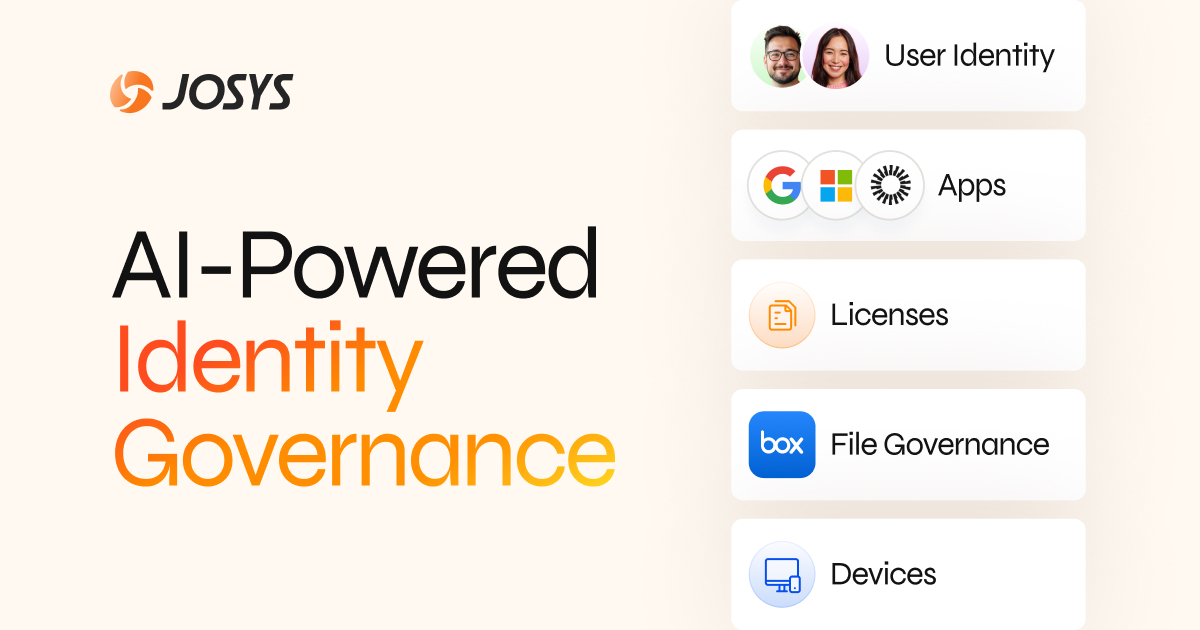
Josys takes a different approach by offering a SaaS and Identity Governance Platform that extends beyond SaaS to include hardware, devices, and files, ensuring end-to-end lifecycle management. This makes it ideal for IT teams and MSPs who need comprehensive visibility without juggling multiple platforms.
2. BetterCloud: Enhanced Automation and Security Controls
BetterCloud specializes in SaaS operations for Google Workspace and Microsoft 365 environments. If your organization is heavily invested in these ecosystems, BetterCloud offers deep automation capabilities and granular security controls that go beyond what general-purpose SMP platforms provide.
3. Torii: Streamlined Discovery and SaaS Optimization
Torii focuses on discovery and optimization, making it a strong choice for organizations that need to identify and rationalize their SaaS portfolio quickly. The platform's user-friendly interface and actionable insights help IT teams make data-driven decisions about which applications to keep, consolidate, or eliminate.
4. Productiv: Data-Driven Analytics for Spend Management
Productiv emphasizes analytics and business intelligence, providing detailed insights into how applications are actually being used. This data-driven approach helps justify IT investments and identify opportunities to optimize spend based on real usage patterns rather than assumptions.
5. CloudEagle.ai: Procurement and Renewal Simplification
CloudEagle.ai streamlines the procurement process with features designed to simplify vendor negotiations, contract management, and renewal tracking. If your team spends significant time managing vendor relationships, CloudEagle.ai's procurement-focused approach can save considerable effort.
6. AssetSonar: IT Asset and Lifecycle Visibility
AssetSonar bridges the gap between SaaS management and traditional IT asset management. The platform provides visibility into both software and hardware assets, making it suitable for organizations that need comprehensive asset tracking without the complexity of enterprise ITAM solutions.
7. Spendbase: Efficient Subscription Tracking
Spendbase focuses specifically on subscription management and spend optimization. Its streamlined approach makes it a good fit for smaller teams that need basic visibility and control without extensive automation or integration requirements.
8. Cledara: Centralized SaaS Purchasing and Management
Cledara combines SaaS management with centralized purchasing through virtual cards for each subscription. This approach provides financial control and visibility while simplifying the procurement process for decentralized teams.
9. Zylo: Comprehensive Spend and Usage Insights
Zylo offers enterprise-grade SaaS management with a focus on spend optimization and license harvesting. The platform's robust reporting capabilities make it suitable for larger organizations with complex approval workflows and detailed compliance requirements.
10. Open-Source and Free SaaS Tracking Tools
For organizations with limited technical resources and budgets, open-source alternatives such as self-hosted asset management systems can provide basic SaaS tracking functionality. While these tools require more setup and maintenance, they offer complete customization and no licensing costs.
In-Depth Comparison of Leading Zluri Alternatives
Feature Set Analysis: Automation, Reporting, Integrations
When comparing platforms, evaluate automation depth rather than just availability. Some platforms offer basic if-then workflows, while others provide sophisticated multi-step automation with conditional logic and exception handling. Reporting capabilities should include customizable dashboards, scheduled reports, and the ability to drill down into granular data.
Integration breadth matters, but integration depth matters more. A platform that connects to 200 applications superficially is less valuable than one that deeply integrates with your core 20 systems.
Pricing Models and Cost-Effectiveness
Most SaaS management platforms use per-employee pricing, but the details vary significantly. Some charge based on managed users, others on total employees. Some include all features in a single tier, while others gate critical functionality behind enterprise plans. Calculate the total cost of ownership, including implementation, training, and ongoing administration - not just the license fee.
Scalability for Growing IT Environments
A platform that works well for 100 employees may struggle at 1,000. Look for evidence of scalability: Can the platform handle multiple entities or subsidiaries? Does it support complex organizational hierarchies? How does performance degrade as data volume increases? Ask vendors for references from organizations at your target size, not just your current size.
Vendor Support, Onboarding, and Implementation Speed
Implementation timelines range from days to months depending on platform complexity and your environment. Evaluate what's included in standard onboarding versus what requires professional services. Ongoing support quality is equally important—check whether you'll have a dedicated customer success manager or rely on ticket-based support.
Comparing Zluri Head-to-Head With Its Competitors
Zluri vs. BetterCloud: For Advanced IT Teams
BetterCloud offers deeper automation for Google Workspace and Microsoft 365 environments, while Zluri provides broader SaaS coverage. Choose BetterCloud if you need granular security controls within these specific ecosystems. Choose Zluri if you need visibility across a wider range of applications.
Zluri vs. CloudEagle.ai: Optimizing Procurement and Renewals
CloudEagle.ai focuses heavily on the procurement process, including vendor negotiations and contract management. Zluri emphasizes ongoing management and optimization. If procurement efficiency is your primary pain point, CloudEagle.ai may be the better fit. If you need comprehensive lifecycle management, Zluri has the edge.
Zluri vs. Spendbase: Managing SaaS Subscriptions
Spendbase offers a more streamlined, focused approach to subscription tracking compared to Zluri's comprehensive platform. For smaller teams with straightforward requirements, Spendbase's simplicity may be an advantage. Larger organizations with complex needs will likely outgrow it quickly.
Zluri vs. Josys: Modern SaaS Operations Simplified
Josys provides an end-to-end lifecycle management platform that includes hardware, devices, and files. If you're managing physical IT assets alongside software subscriptions, Josys eliminates the need for separate tools. If you only need SaaS visibility, either platform works, but Josys offers greater flexibility as your IT and identity environment becomes more complex and SaaS usage expands.
What sets Josys apart is five key differentiators.
First, Josys is able to support MSPs, with a multi-tenant architecture that Zluri doesn't offer: critical if you're managing multiple client environments.
Second, our AI Integration Builder enables us to create custom integrations that even Zluri can't support, ensuring your specific tech stack is covered.
Third, Josys includes file governance capabilities that provide visibility and control over sensitive data across file-sharing platforms, a gap in Zluri's offering.
Fourth, our all-inclusive pricing model means you get the full platform without feature-based add-ons that can make Zluri's costs unpredictable as your needs grow.
Finally, Josys delivers operational efficiency by automating IT workflows, managing device lifecycles, and providing real-time visibility into user identities, software licenses, physical assets, and file permissions, all in one place.
How Josys Complements Your SaaS Management Strategy
From our experience working with IT teams and MSPs, the biggest challenge isn't finding a tool that manages SaaS; it's finding a platform that manages everything without creating new silos. Josys was built specifically to address this problem.
Here's what that looks like in practice: When a new employee joins, Josys automatically provisions their SaaS access, provides the right file access, and tracks the entire onboarding process in one place. When they leave, everything is deprovisioned simultaneously; no manual coordination is required. Your finance team uses a single dashboard to view both software subscriptions cost. Your security team gets unified visibility into both application access and device compliance.
This unified approach means you're not just managing SaaS and identities more effectively; you're transforming your entire IT operation. And because Josys is designed for flexibility, it scales with you, whether you're a 50-person startup or a 500-person enterprise.
Final Thoughts: Choosing the Right Zluri Alternative for Your IT Needs
The right SaaS management platform depends on your specific context: your organization's size, your existing tech stack, your team's capabilities, and your growth trajectory. There's no universally "best" option—only the best option for your situation.
Start by identifying your primary pain points. If it's a procurement inefficiency, prioritize platforms with robust vendor management capabilities. If it's security and compliance, look for robust shadow IT detection and risk assessment. If the complexity of managing identity and SaaS as a whole is a concern, consider Josys, which eliminates tool sprawl.
Whatever you choose, make sure it solves not just today's problems but tomorrow's challenges. The best investment is a platform that grows with you rather than one you'll outgrow in 18 months.
Ready to see how unified IT operations can transform your workflow?Book a demo with Josys to discover how we help IT teams and MSPs manage software, hardware, and everything in between.
Frequently Asked Questions (FAQs)
Why should companies look for Zluri alternatives?
Companies explore Zluri alternatives for several reasons: pricing that doesn't scale well with growth, the need for hardware and device management alongside SaaS, limited regional availability, or requirements for deeper integrations with specific systems or custom apps. The platform may also lack certain industry-specific features or compliance capabilities that some organizations require.
What features should I look for in a Zluri alternative?
Prioritize deep integrations with your existing HR, finance, and SSO tools; robust automation for user lifecycle management; comprehensive shadow IT detection; flexible pricing that scales with your organization; and unified visibility across both software and hardware assets if you manage physical IT resources.
Which companies are the best Zluri alternatives?
The best alternative depends on your specific needs. Josys offers unified SaaS and identity management for comprehensive visibility. BetterCloud excels for Google Workspace and Microsoft 365 environments. Torii provides strong discovery and optimization features. Productiv focuses on data-driven analytics. CloudEagle.ai streamlines procurement workflows.
How do Zluri alternatives reduce SaaS waste?
These platforms identify unused licenses, duplicate applications, and underutilized subscriptions through usage tracking and analytics. They provide visibility into actual application usage versus purchased licenses, enabling IT teams to make data-driven decisions about renewals, consolidation, and license harvesting.
Can SaaS management platforms improve compliance?
Yes, significantly. These platforms maintain audit trails of user access, automate compliance reporting, enforce access policies, and provide visibility into data security posture across applications. Many include built-in compliance frameworks for standards like SOC 2, ISO 27001, and GDPR.
Do Zluri alternatives integrate with SSO tools?
Most modern SaaS management platforms integrate with major SSO providers like Okta, Azure AD, Google Workspace, and OneLogin. These integrations enable real-time visibility into application usage and facilitate automated provisioning and deprovisioning workflows based on identity management events.
Are Zluri alternatives cheaper?
Pricing varies significantly across platforms. Some alternatives like Spendbase and Cledara may be more cost-effective for smaller organizations, while enterprise-focused platforms like Zylo may have comparable or higher pricing. Consider total cost of ownership including implementation, training, and administration—not just license fees.
How do Zluri alternatives help IT teams?
These platforms reduce manual work through automation, provide visibility into shadow IT and security risks, enable data-driven decision-making about software investments, streamline onboarding and offboarding processes, and help optimize spend by identifying waste and redundancy across the SaaS portfolio.
Can Zluri alternatives detect shadow IT?
Yes, most alternatives include shadow IT detection through various methods: SSO integration monitoring, browser extension tracking, network traffic analysis, expense report scanning, and credit card transaction monitoring. The sophistication of detection varies by platform, with some offering real-time alerts and risk scoring for unauthorized applications.
What criteria should I prioritize when evaluating Zluri alternatives?
Focus on three core areas: integration depth with your existing systems (not just breadth of connections), automation sophistication that matches your workflow complexity, and scalability that accommodates your growth trajectory. Also consider implementation speed, ongoing support quality, and whether the platform solves problems beyond what Zluri offered, not just replicates its functionality.
Are any of the listed platforms free or open-source?
While most commercial SaaS management platforms require paid subscriptions, some open-source IT asset management tools can be adapted for basic SaaS tracking. However, these require technical resources to implement and maintain, and typically lack the sophisticated integrations, automation, and analytics that commercial platforms provide. For most organizations, the time investment outweighs the licensing savings.
Which alternatives best automate SaaS user management?
BetterCloud offers the deepest automation for Google Workspace and Microsoft 365 environments. Josys provides comprehensive automation across both SaaS and hardware provisioning. Torii and Zluri itself both offer strong automation capabilities with customizable workflows. The best choice depends on your tech stack, platforms that integrate deeply with your core systems will always automate more effectively than those with surface-level connections.