This site uses third-party website tracking technologies to provide and continually improve our services, and to display advertisements according to users' interests. I agree and may revoke or change my consent at any time with effect for the future.
The average enterprise now uses over 300 SaaS applications, with mid-sized companies typically managing between 50-150 tools. Behind this explosive growth lies a dangerous financial leak most organizations are only beginning to recognize: poorly managed SaaS renewals.
While companies focus on optimizing cloud infrastructure costs or negotiating initial SaaS contracts, renewal management remains a neglected discipline that silently drains IT budgets. According to Flexera's 2025 State of ITAM Report, organizations waste approximately 35% of their SaaS spend on unused or underutilized licenses—a figure that grows with each unoptimized renewal.
The SaaS Renewal Challenge
Missed cancellation windows = unwanted costs.
Most SaaS contracts include auto-renewal clauses with 30-90 day cancellation notice periods. Miss this window, and you're locked into another term—whether you need the software or not.
Last-minute renewals without renegotiation.
When renewals appear suddenly, procurement teams lack leverage. Without usage data or time to evaluate alternatives, companies typically accept vendor-proposed increases rather than negotiate better terms. This reactive approach costs organizations an average of 15-30% in potential savings per contract.
Vendor sprawl is causing overlooked contracts.
As departments independently purchase software, tracking becomes exponentially complex. Contracts spread across email inboxes, shared drives, and procurement systems create dangerous visibility gaps. The days of managing SaaS renewals through spreadsheets, calendar reminders, and email folders are ending. As SaaS environments grow more complex, automation isn't just an efficiency play—it's a financial necessity.
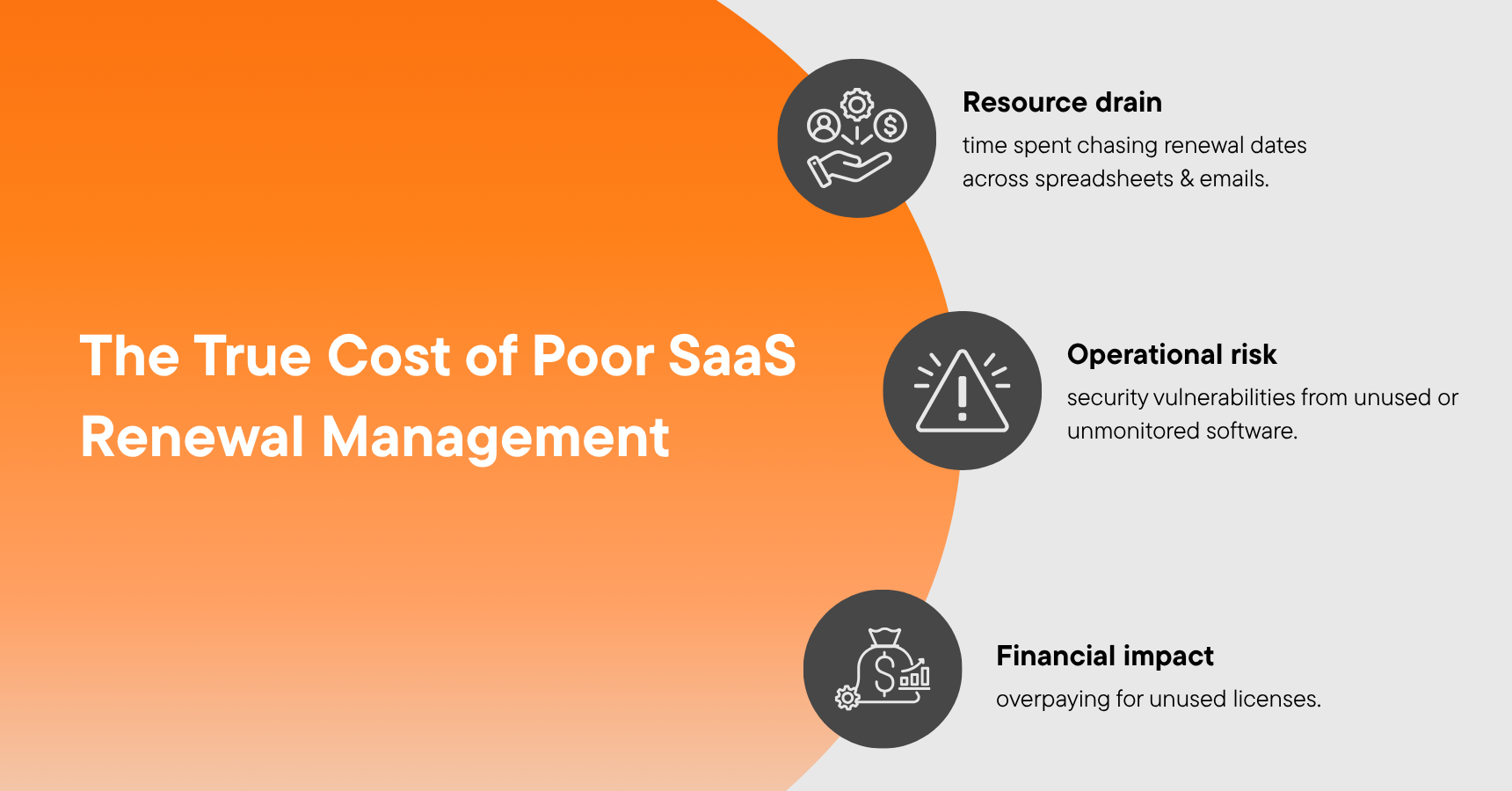
The True Cost of Poor SaaS Renewal Management
The impact of suboptimal renewal management extends far beyond the obvious waste of paying for unused licenses. When organizations fail to implement systematic renewal processes, they expose themselves to cascading financial and operational consequences.
Overpaying for unused licenses.
Without visibility into actual usage patterns before renewal, organizations perpetuate this waste year after year. A Fortune 500 company recently discovered they were renewing enterprise agreements at 100% of their previous user count despite employee turnover and role changes reducing actual need by 27%—translating to over $2.3 million in unnecessary annual spend.
The problem compounds when companies fail to rightsize license tiers. Many SaaS tools offer multiple feature tiers, yet renewal decisions rarely incorporate analysis of which features teams actually use.
Security vulnerabilities from unused software.
Forgotten or unmanaged SaaS applications create significant security exposures. When IT lacks visibility into the full SaaS portfolio, critical security updates may be missed, access controls remain unaudited, and data governance policies can't be properly enforced.
Gartner research indicates that organizations with fragmented SaaS management processes experience 35% more security incidents related to cloud applications than those with centralized oversight. Each unmonitored application represents a potential entry point for data breaches, with IBM's Cost of a Data Breach Report 2025 placing the average breach cost at $4.44 million.
Time spent chasing renewal dates manually
The administrative burden of manual renewal tracking creates hidden operational costs that most organizations fail to quantify. IT and procurement teams report spending 5-8 hours per month per 10 SaaS applications on renewal-related activities—locating contracts, gathering usage data, coordinating with stakeholders, and negotiating terms.
For a mid-sized company with 100 SaaS applications, this translates to 50-80 hours monthly of high-value employee time diverted to administrative tasks. At an average IT manager hourly cost of $75, that's $45,000-$72,000 annually in labor costs alone—not including the opportunity cost of strategic initiatives delayed or deprioritized.
The financial, security, and operational costs compound over time, creating a compelling case for systematic automation of the renewal management process.
What is a SaaS Renewal Automation?
SaaS renewal automation represents a fundamental shift from reactive, manual processes to proactive, technology-driven management of subscription software lifecycles. Rather than treating renewals as isolated events, automation creates a continuous management framework that begins the moment a contract is signed.
At its core, SaaS renewal automation eliminates the human dependencies that make traditional renewal management so fragile. Instead of relying on calendar reminders or institutional knowledge, automation platforms create systematic workflows that trigger the right actions at the right times—regardless of staff changes, competing priorities, or oversight failures.
The most effective automation doesn't simply replicate manual processes with technology; it fundamentally transforms how organizations approach the entire renewal lifecycle by incorporating usage data, stakeholder input, and business context into a unified decision framework.
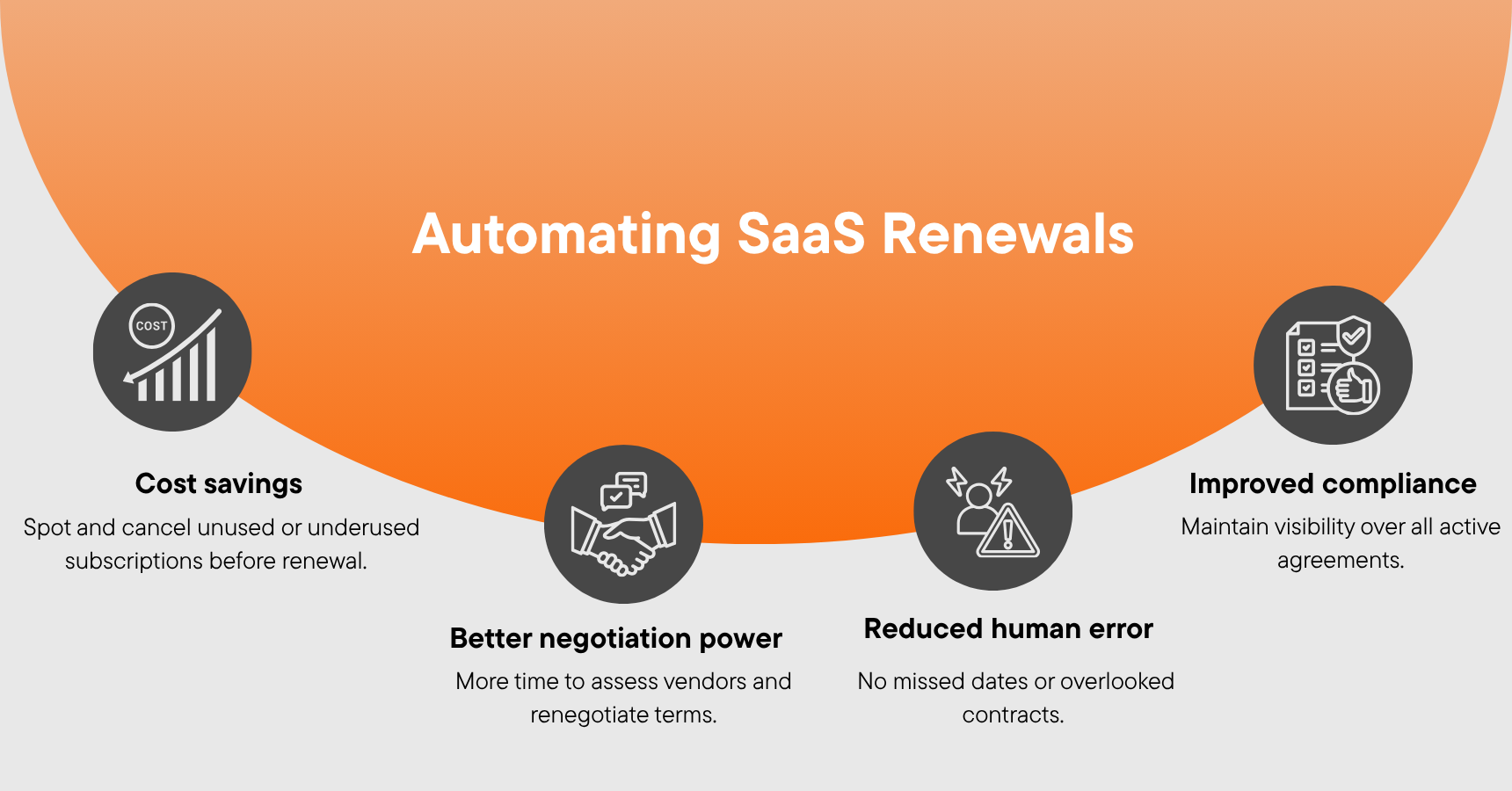
Benefits of Automating SaaS Renewals
Implementing systematic renewal automation delivers measurable improvements across financial, operational, and strategic dimensions. Organizations that have adopted comprehensive renewal automation report transformative outcomes that extend far beyond basic cost savings.
Cost savings: Spot and cancel unused or underused subscriptions before renewal.
The most immediate benefit of renewal automation is the elimination of unnecessary spend. By identifying zero-usage licenses and applications well before renewal deadlines, organizations can take decisive action to reduce waste.
These savings come through multiple mechanisms:
Complete cancellation of unused applications
License quantity reductions based on actual utilization
Downgrading from premium to standard tiers where advanced features go unused
Consolidating redundant tools with overlapping functionality
Converting annual contracts to monthly for seasonal or project-based needs
Unlike one-time cost-cutting exercises, automation creates a sustainable optimization cycle that prevents waste from returning as the SaaS portfolio evolves.
More time to assess vendors and renegotiate terms.
When renewal decisions begin 90+ days before deadlines rather than in the final weeks, procurement teams gain significant leverage with vendors. This expanded timeline enables:
Competitive analysis and alternative vendor evaluation
User satisfaction surveys and stakeholder consultation
Pilot testing of potential replacement solutions
Usage data collection to challenge vendor pricing models
Multi-year contract negotiation for enhanced discounts
Organizations with mature renewal processes report average discount improvements of 15-22% compared to reactive renewals. These negotiations extend beyond simple price reductions to include more favorable terms around:
Service level agreements
Data ownership and portability
Termination rights
Future pricing protection
Implementation and training support
The psychological advantage of clearly communicating to vendors that renewal is genuinely optional—rather than a foregone conclusion—fundamentally shifts negotiation dynamics in the customer's favor.
No missed dates or overlooked contracts.
The elimination of manual tracking removes the most common failure points in renewal management. Organizations with automated systems report near-zero instances of unintended auto-renewals or missed cancellation windows, compared to an average of 4-7 such incidents annually under manual processes.
This reliability creates cascading benefits:
Elimination of emergency procurement exceptions
Reduced legal review of contract termination options
Fewer vendor disputes over cancellation attempts
More predictable budgeting and forecasting
Decreased stress on IT and procurement teams
The organizational confidence that comes from knowing every renewal will be properly evaluated creates space for strategic thinking rather than constant crisis management.
Maintain visibility over all active agreements.
Automation creates a comprehensive system of record that supports broader governance and compliance requirements. This centralized visibility enables:
Accurate software asset management reporting
Simplified audit preparation and response
Consistent enforcement of procurement policies
Clear accountability for application ownership
Comprehensive security and risk assessment
For regulated industries, this visibility is particularly valuable for demonstrating appropriate vendor management controls and data processing oversight. Financial services firms implementing SaaS renewal automation report 40-60% reductions in time spent responding to regulatory inquiries about third-party software.
The cumulative impact of these benefits creates a compelling business case for automation, with most organizations achieving full ROI within 6-9 months of implementation.
Why an AI-Native Identity Governance Platform Like Josys is the Ideal Solution
While point solutions for contract management or basic renewal tracking exist, a AI-native identity security and governance platform like Josys delivers transformative capabilities that address the entire renewal lifecycle. The integrated approach eliminates data silos and workflow gaps that undermine most renewal optimization efforts.
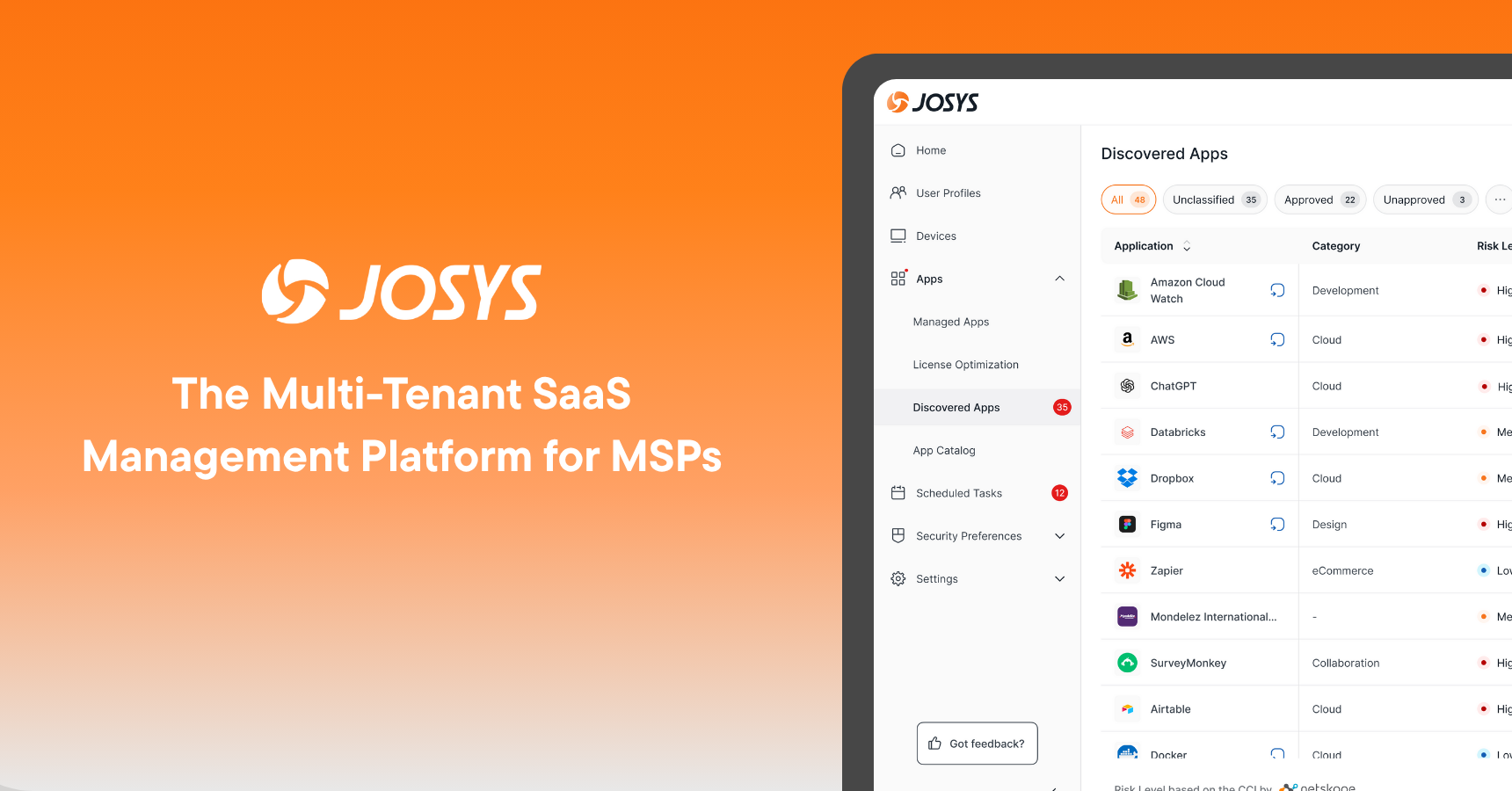
Centralized SaaS inventory – All contracts, licenses, and users in one place. Josys creates a dynamic, always-current inventory of your entire SaaS ecosystem through multi-source discovery.
Automated alerts & workflows – Never miss a critical renewal date. Josys transforms renewal management from a calendar-based reminder system to an intelligent workflow engine that alerts you.
Usage-based insights – Cancel or downgrade underused tools. Josys goes beyond simple login tracking to provide nuanced utilization analytics that power smarter renewal decisions.
Integration with HR and IT systems – Keep user and contract data always up-to-date. Josys creates a connected ecosystem that automatically maintains SaaS inventory accuracy.
Scalability for growth – Easily manage contracts across multiple departments or global teams. As organizations grow more complex, Josys provides the structural flexibility to maintain governance while accommodating diverse business needs.
Conclusion
The era of treating SaaS renewals as isolated calendar events rather than strategic business decisions is ending. As organizations increasingly rely on SaaS for mission-critical functions, the financial and operational risks associated with manual renewal management have become unsustainable.
The data is clear: companies waste nearly a third of their SaaS spend on unused or underutilized licenses, expose themselves to significant security vulnerabilities through unmanaged applications, and divert valuable IT and procurement resources to administrative tracking rather than strategic value creation. This waste isn't merely inefficient—it directly undermines competitiveness in markets where operational agility and cost control are increasingly inseparable.
Automation through a AI-native identity security and governance platform like Josys transforms renewal management from a reactive, error-prone process to a proactive, data-driven discipline. By centralizing your SaaS inventory, implementing intelligent workflows, analyzing actual usage patterns, integrating with core business systems, and providing scalable governance, Josys delivers immediate cost savings while creating sustainable optimization processes that grow with your organization.
Don't let another renewal cycle pass with money left on the table. Book a demo of Josys today to see how automated renewal management can transform your SaaS governance and deliver immediate, measurable ROI for your organization.