This site uses third-party website tracking technologies to provide and continually improve our services, and to display advertisements according to users' interests. I agree and may revoke or change my consent at any time with effect for the future.
SaaS management platforms face mounting pressure to maintain clean, secure user identities as cyber threats evolve and regulatory requirements tighten. Traditional manual approaches to identity management no longer scale effectively for organizations managing hundreds or thousands of user accounts across multiple applications.
AI transforms identity hygiene by automatically detecting orphaned accounts, identifying privilege escalation risks, and ensuring continuous compliance monitoring across entire SaaS ecosystems. Machine learning algorithms analyze user behavior patterns, access requests, and account lifecycles to flag anomalies that human administrators might miss.
CISOs increasingly rely on AI-powered platforms to reduce security risks while meeting strict regulatory requirements. These intelligent systems provide real-time insights into identity health, automate remediation tasks, and generate compliance reports that satisfy auditors and regulators.
Key Takeaways
AI automates the detection and cleanup of orphaned accounts and excessive privileges across SaaS platforms
Machine learning algorithms continuously monitor user behavior to identify security risks and compliance violations
Intelligent identity management systems help CISOs meet regulatory requirements while reducing manual administrative overhead
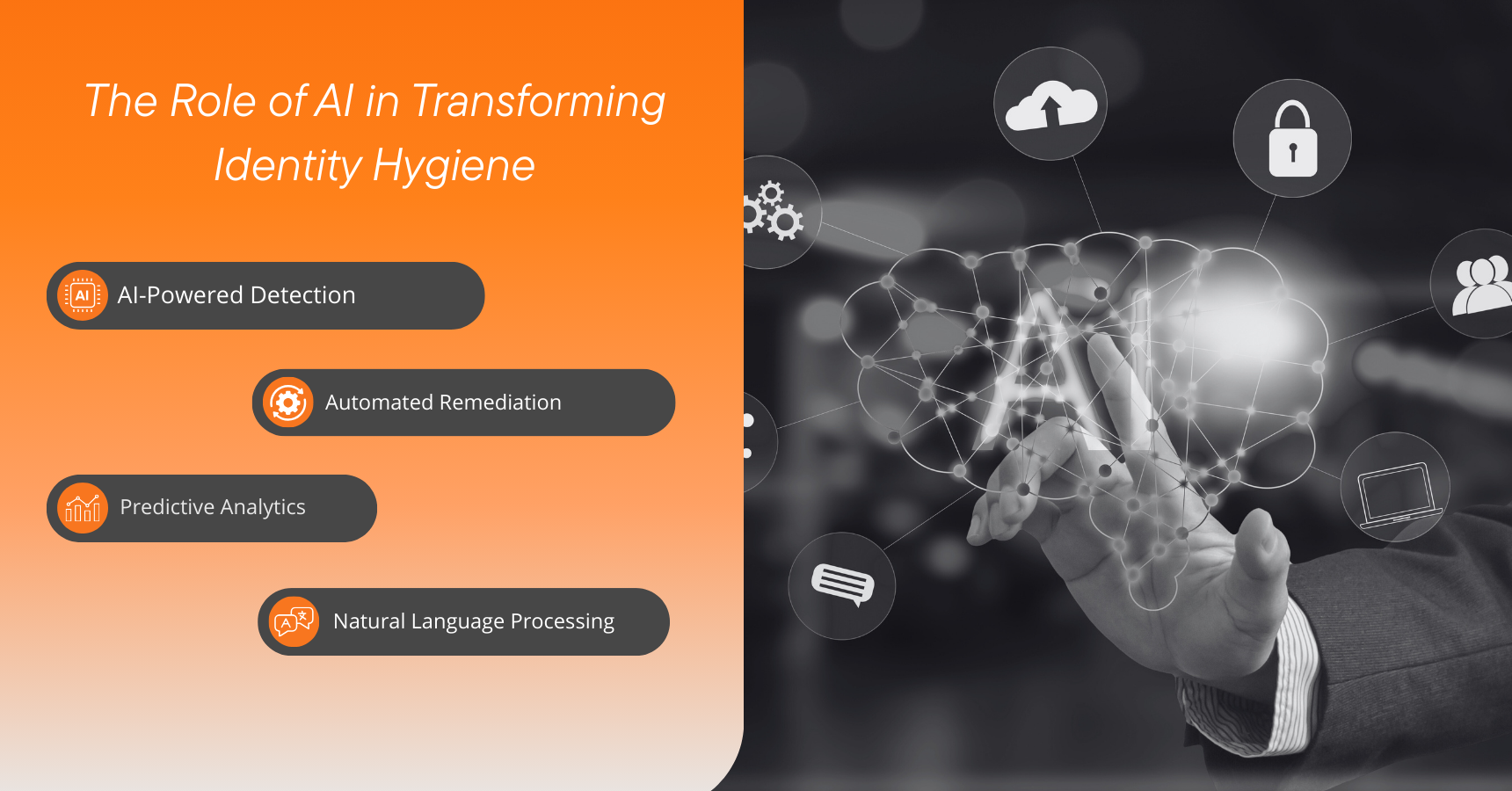
The Role of AI in Transforming Identity Hygiene
AI technologies enable SaaS management platforms to automatically detect identity risks, execute remediation workflows, and predict potential security threats before they materialize. Machine learning algorithms process user behavior patterns and access data to maintain clean identity environments across enterprise systems.
AI-Powered Detection
AI security systems continuously monitor user access patterns and identify anomalous behaviors that indicate compromised accounts or inappropriate permissions. Machine learning algorithms analyze login patterns, device usage, and application access to detect deviations from established baselines.
Key Detection Capabilities:
Behavioral Analysis: Identifies unusual login times, locations, and access patterns
Permission Anomalies: Flags users with excessive or inappropriate access rights
Dormant Account Detection: Locates inactive accounts that pose security risks
Threat detection algorithms process millions of authentication events to identify suspicious activities. These systems recognize patterns like concurrent logins from different geographic locations or unusual application access sequences.
AI deployments examine metadata from identity providers and SaaS applications to identify orphaned accounts and stale permissions. The algorithms cross-reference employee databases with active user accounts to detect discrepancies that manual reviews often miss.
Automated Remediation
Automated remediation workflows execute predefined responses when AI systems detect identity hygiene issues. These cybersecurity solutions reduce response times from hours to minutes by eliminating manual intervention requirements.
Remediation Actions:
Account suspension for high-risk activities
Permission revocation for inappropriate access
Password reset enforcement for compromised credentials
AI workflows trigger specific remediation steps based on risk severity levels. Low-risk issues might generate alerts for administrator review, while high-risk detections automatically disable accounts pending investigation.
Integration with identity management systems allows AI to execute complex remediation sequences. The system can simultaneously revoke SaaS application access, disable VPN connections, and notify security teams through automated ticketing systems.
Predictive Analytics
Predictive analytics capabilities forecast identity-related security risks before they manifest into actual threats. Machine learning models analyze historical data patterns to identify accounts likely to experience security incidents.
Predictive Indicators:
Users approaching role changes who may retain excess permissions
Accounts showing gradual permission accumulation over time
These algorithms examine user lifecycle data to predict when accounts will become dormant or when employees might change roles. Early identification allows proactive permission adjustments before security gaps develop.
Risk scoring models assign numerical values to user accounts based on multiple factors including access patterns, permission scope, and historical security events. Higher scores trigger preventive security measures before incidents occur.
Natural Language Processing
Natural Language Processing (NLP) enhances identity hygiene by analyzing unstructured data sources for security insights. NLP algorithms process support tickets, security reports, and user communications to identify identity-related issues.
NLP Applications:
Support ticket analysis for identity problems
Security report parsing for threat intelligence
User request processing for access modifications
Text analysis identifies recurring identity management issues mentioned in help desk tickets or security incident reports. This information helps administrators understand common problems and implement preventive measures.
NLP systems extract relevant security information from multiple data sources including email logs, chat systems, and documentation. The processed information provides context for automated decision-making in identity management workflows.
How AI-Native Identity Governance Platforms Like Josys Lead the Way
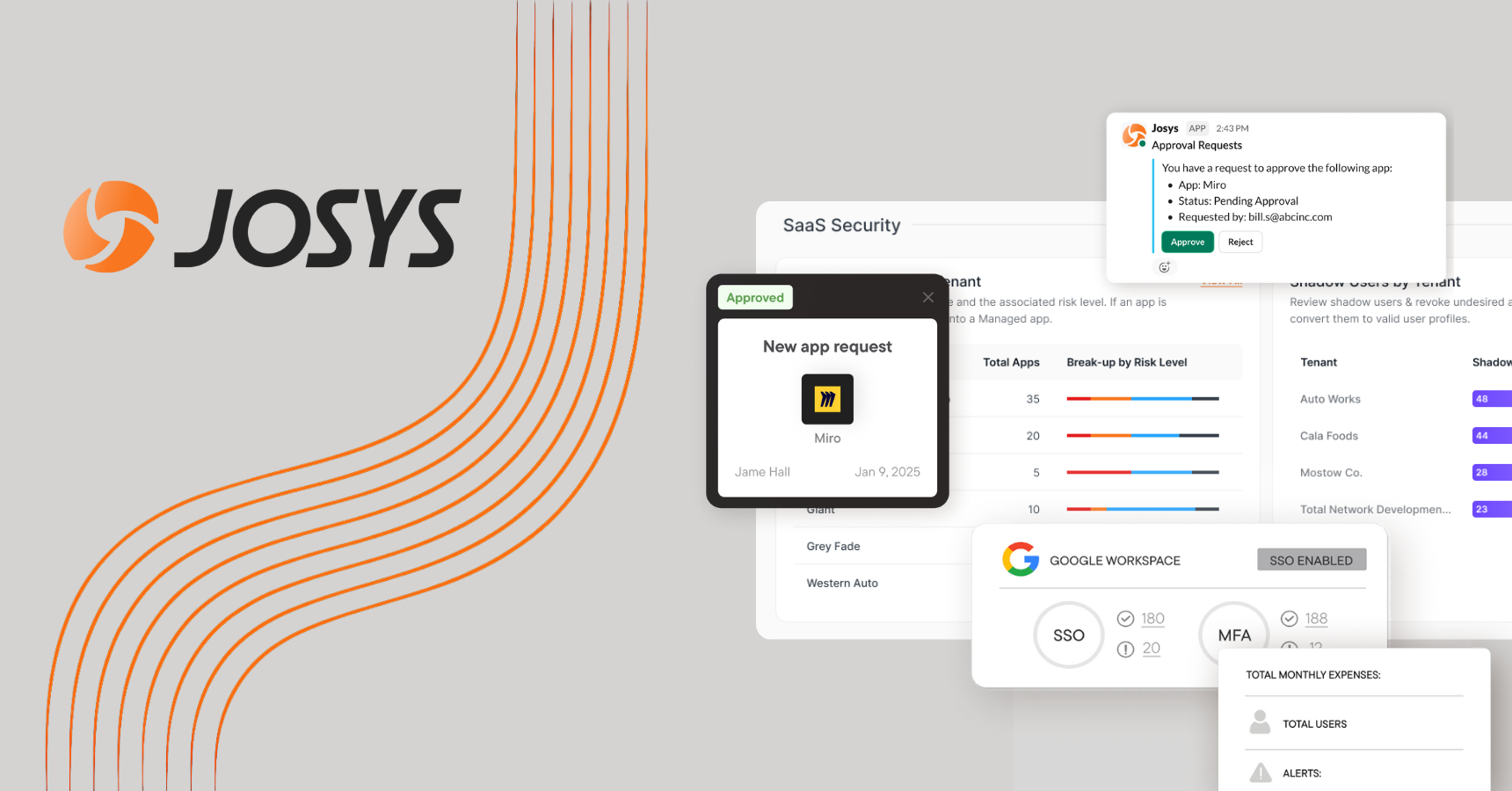
Josys provides unified dashboards that aggregate identity data across all connected SaaS applications. The platform automatically discovers shadow IT applications and tracks user access patterns in real-time.
Organizations gain complete visibility into who has access to which applications and when those permissions were granted. This centralized approach eliminates blind spots that typically exist when managing identities across dozens of different SaaS tools.
The platform maps user identities across multiple systems, identifying duplicate accounts and orphaned access rights. Security teams can view access controls for their entire SaaS ecosystem from a single interface.
Risk assessments become more accurate when all identity data is consolidated. Josys displays access anomalies, excessive permissions, and compliance violations through intuitive visual reports that security teams can act upon immediately.
AI + Automation at Scale
Machine learning algorithms within Josys analyze user behavior patterns to identify suspicious access requests and dormant accounts. The AI continuously learns from organizational access patterns to improve detection accuracy.
Automated workflows handle routine identity hygiene tasks without manual intervention. The system can automatically revoke access for departing employees, rotate shared credentials, and adjust permissions based on role changes.
Risk scoring algorithms evaluate each user's security posture by analyzing factors like login locations, application usage patterns, and permission levels. High-risk users are flagged for immediate review.
The platform processes thousands of access events simultaneously, scaling identity management operations beyond what manual processes could achieve. AI-driven recommendations help administrators prioritize the most critical security issues first.
Seamless Integrations
Josys connects directly with popular SaaS applications through native APIs and pre-built connectors. These integrations enable real-time synchronization of user data and access controls across the entire technology stack.
Single sign-on (SSO) integration streamlines user authentication while maintaining detailed audit logs. The platform works with existing identity providers like Active Directory and Okta without disrupting current workflows.
Automated provisioning and deprovisioning occur instantly when employee status changes are detected in HR systems. Access controls update automatically across all connected applications, reducing the window of security exposure.
The platform supports REST APIs for custom integrations with proprietary systems. Organizations can extend identity hygiene capabilities to legacy applications and specialized tools that lack standard connectors.
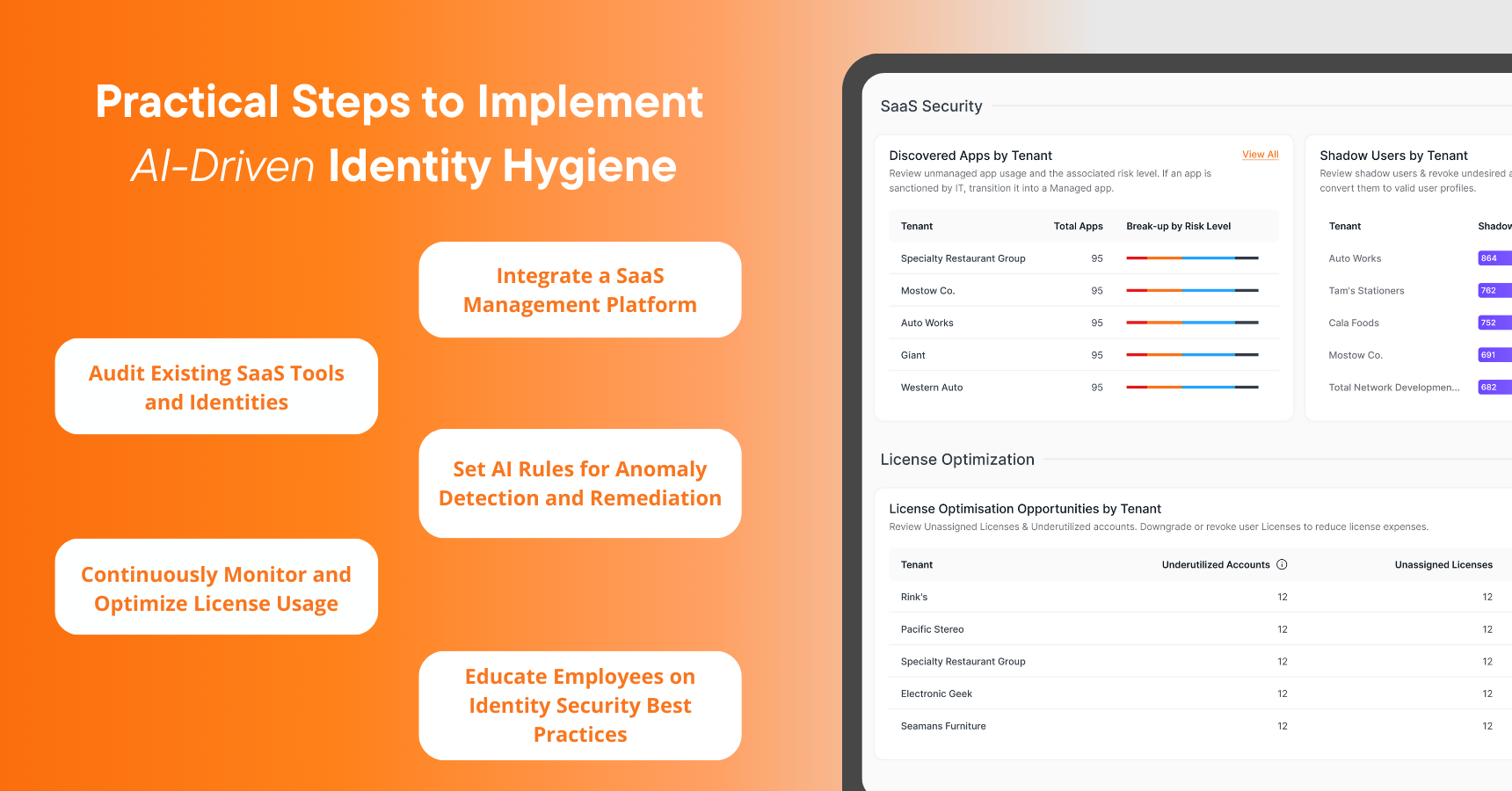
Practical Steps to Implement AI-Driven Identity Hygiene
Organizations can establish robust AI-driven identity hygiene through systematic auditing, platform integration, automated rule configuration, continuous monitoring, and comprehensive employee education. These foundational steps create a secure framework for managing SaaS identities at scale.
Audit Existing SaaS Tools and Identities
Companies must first catalog all SaaS applications and associated user accounts across their organization. This discovery process reveals shadow IT applications, duplicate accounts, and inactive users that create security vulnerabilities.
The audit should identify every application with access to corporate data. IT teams need to document user permissions, access levels, and authentication methods for each platform.
Key audit elements include:
Active and inactive user accounts
Permission levels and role assignments
Integration points between applications
Authentication protocols in use
Data access patterns and frequency
Organizations often discover 3-5 times more applications than initially expected. This visibility forms the foundation for effective identity management and IAM strategy development.
The audit results should be compiled into a comprehensive inventory. This database becomes the baseline for implementing AI-driven monitoring and anomaly detection systems.
Integrate an AI-Native Identity Governance Platform
AI-native identity security and governance platforms like Josys provide centralized visibility and control over application portfolios. These tools connect to existing applications through APIs and SSO integrations to gather real-time usage data.
Integration typically requires administrative permissions for each SaaS application. The platform then begins collecting user activity, license utilization, and access pattern data automatically.
Essential integration features:
API connectivity for real-time data collection
SSO integration for seamless user experience
Role-based access controls for administrative functions
Automated discovery of new applications
Compliance reporting capabilities
The platform aggregates identity data from multiple sources into a unified dashboard. This consolidation enables AI algorithms to identify patterns and anomalies across the entire SaaS ecosystem.
Most platforms require 2-4 weeks for complete integration and initial data collection. Organizations should prioritize high-risk applications with sensitive data access first.
Set AI Rules for Anomaly Detection and Remediation
AI systems require specific parameters to identify suspicious identity behaviors and security threats. Organizations must configure rules that balance security protection with operational efficiency.
Machine learning algorithms analyze baseline user behaviors to detect deviations. These systems learn normal access patterns, geographic locations, and usage times for each individual user.
Automated remediation actions should escalate based on risk levels. Low-risk anomalies might trigger alerts while high-risk activities could suspend accounts immediately.
The system should integrate with existing identity security infrastructure. This connection enables coordinated responses across multiple platforms and applications simultaneously.
Regular rule refinement reduces false positives and improves detection accuracy. Organizations typically achieve optimal performance after 30-60 days of initial tuning.
Continuously Monitor and Optimize License Usage
AI systems track license utilization patterns to identify optimization opportunities and cost savings. These tools analyze user activity to determine actual software needs versus purchased licenses.
Automated monitoring reveals inactive accounts, underutilized licenses, and redundant application functionality. This data supports informed decisions about license renewals and application consolidation.
Monitoring metrics include:
Daily and monthly active users
Feature utilization rates within applications
License allocation versus actual usage
Peak usage periods and capacity planning
Cost per user calculations
The system should automatically flag licenses approaching renewal dates. This early warning enables proactive negotiations and prevents automatic renewals for unused software.
Data protection compliance requires careful handling of user activity information. Organizations must ensure monitoring practices align with privacy regulations and internal policies.
Educate Employees on Identity Security Best Practices
Employee training programs must address the human elements of identity hygiene and security awareness. Workers need to understand their role in maintaining secure access practices across SaaS applications.
Training should cover password management, phishing recognition, and proper account usage procedures. Employees must understand the risks of sharing credentials or using unauthorized applications.
Essential training topics:
Multi-factor authentication setup and usage
Password hygiene and manager adoption
Phishing identification and reporting procedures
Approved application lists and request processes
Data handling protocols for sensitive information
Regular security awareness sessions reinforce proper identity management practices. These programs should include real-world examples and hands-on demonstrations of security tools.
Organizations should implement role-based training programs. Administrators require deeper technical knowledge while end-users need practical guidance for daily activities.
Measurement of training effectiveness through simulated phishing tests and security assessments helps identify knowledge gaps. This feedback enables continuous improvement of educational programs.
Conclusion
AI transforms identity hygiene from reactive maintenance into proactive protection. Organizations no longer need to rely on manual processes that leave gaps in security and compliance.
Cost optimization through unused license detection
Compliance assurance via automated reporting
Operational efficiency with reduced manual tasks
Risk mitigation through anomaly detection
Josys provides organizations with the visibility and intelligence required for comprehensive identity hygiene. The platform combines AI-powered automation with actionable insights to maintain security across expanding SaaS ecosystems.
The technology eliminates guesswork from access management. Organizations receive clear data about user behavior, application usage, and potential vulnerabilities.
Request a demoto experience how Josys delivers AI-powered identity hygiene solutions tailored to your organization's needs.